

In a world of missed calls and full inboxes, your voicemail greeting is a powerful, often overlooked, tool for capturing every lead and opportunity. A generic, uninspired message tells potential clients you're unavailable and perhaps unorganised. A well-crafted greeting, however, transforms a missed call into a warm lead, a confirmed appointment, or a resolved customer issue. It's the difference between a lost prospect and a scheduled consultation.
This guide moves beyond basic templates to provide 10 powerful, industry-specific voicemail message examples designed for Australian professionals, including real estate agents, mortgage brokers, and tradies. We'll break down the specific strategy behind each script, offering actionable takeaways and clear insights you can implement immediately. Forget theory; this is about practical application.
You will learn precisely how to structure your message to achieve specific goals, from qualifying new leads to confirming property viewings and requesting client testimonials. We'll also explore how to leverage modern tools like OnSilent's AI-assisted callback features and seamless CRM integration to ensure your voicemail system actively works to grow your business, even when you can't get to the phone. It's time to stop letting valuable calls slip through the cracks and start turning your voicemails into a reliable source of revenue.
1. Professional Real Estate Lead Qualification Voicemail
A professional real estate lead qualification voicemail is a structured, concise message designed to engage potential buyers and sellers who have inquired about a property. Its primary goal is not just to acknowledge the missed call, but to qualify the lead's intent, convey professionalism, and secure a callback. This method works by immediately referencing the specific property of interest, which confirms you've received their exact query and aren't just sending a generic response.
This approach positions the agent as organised and highly responsive, building trust from the very first interaction. By promising a specific callback time and offering multiple contact methods, it empowers the lead to reconnect on their own terms, significantly increasing engagement.
Strategic Breakdown
- Specificity Builds Trust: Mentioning the property address ("Hi [Name], this is [Your Name] from [Agency] returning your call about 123 Smith Street…") instantly validates the lead's inquiry and shows you are paying attention to their specific needs.
- Set Clear Expectations: Stating a precise callback timeframe, such as "I'll give you another call in the next hour…", manages expectations and demonstrates your commitment to timely service.
- Empower the Caller: Providing alternative contact options like an email address or a direct text number gives the lead control and a low-pressure way to respond.
Key Tactic: The power of this voicemail message example lies in its structure: Acknowledge > Specify > Propose Action > Empower. This sequence efficiently moves a cold inquiry toward a warm, qualified conversation.
Actionable Tips for Implementation
To ensure your real estate voicemails resonate with potential investors, it's crucial to be aware of the trends in the 10 best countries for property investment in 2026 and current market dynamics. For local buyers, keep your message under 30 seconds to maximise the chance they listen to the entire message.
Using a system like OnSilent's voicemail routing allows you to create pre-recorded, property-specific messages that are automatically sent to callers, ensuring no lead is ever met with a generic, unhelpful greeting. This organised approach not only improves lead qualification but also strengthens your professional brand from the first point of contact.
2. Service Business Emergency Response Voicemail
A service business emergency response voicemail is a crucial tool for tradies like plumbers, electricians, and HVAC specialists. This message is designed to immediately triage incoming calls, distinguishing between urgent emergencies and standard service requests. Its primary function is to provide an instant, clear path for customers facing a crisis, while managing expectations for non-urgent matters. This method works by acknowledging the call's potential urgency and providing a direct, alternative contact method for genuine emergencies.

This approach immediately establishes your business as a reliable, 24/7 operator, building customer confidence during a stressful situation. By offering a separate emergency line or clear instructions, you filter high-priority jobs from routine queries, allowing you to allocate resources effectively and improve response times where they matter most. Electrical businesses using this strategy have reported up to a 60% improvement in emergency callback rates.
Strategic Breakdown
- Acknowledge and Triage: Immediately address the possibility of an emergency ("If this is an urgent issue…"). This shows empathy and helps the caller self-identify their needs, streamlining your response process.
- Provide a Clear Emergency Protocol: Offering a specific, alternative number or a direct instruction ("…please text the word EMERGENCY to this number now.") creates a fast lane for critical situations, ensuring they are not lost in a general voicemail inbox.
- Set Non-Urgent Expectations: For all other calls, state a clear response time, such as "For all non-emergency inquiries, I will return your call within two business hours." This manages expectations and prevents follow-up calls.
Key Tactic: The effectiveness of this voicemail message example hinges on its Triage > Instruct > Reassure framework. This sequence calms an anxious caller, provides them with an immediate action, and confirms that their non-urgent request is also valued.
Actionable Tips for Implementation
To maximise effectiveness, clearly state your service area or key postcodes in the message to pre-qualify callers and avoid out-of-area emergency calls. This simple addition saves valuable time for both you and the potential customer. Your message should be under 45 seconds to ensure panicked callers listen to the critical emergency instructions.
Implementing a tool like OnSilent’s call routing can automate this process entirely. You can configure it to listen for keywords like "burst pipe" or "no power" in the voicemail, automatically flagging the message and forwarding it to an on-call technician. This ensures that even when you are on another job, genuine emergencies are never missed, solidifying your reputation as a dependable service provider.
3. Appointment Confirmation and Reschedule Voicemail
An appointment confirmation and reschedule voicemail is a proactive communication tool designed to reduce no-shows and streamline scheduling. Its primary function is to remind a client or tenant of their upcoming appointment while simultaneously offering a simple, frictionless way to reschedule if needed. This method works by combining a polite reminder with clear instructions for confirmation or modification, which respects the client's time and reduces administrative overhead.
This dual-purpose approach enhances the customer experience by providing flexibility and demonstrating that your business is organised and considerate. For businesses like medical practices or property management firms, which rely on scheduled attendance, this type of voicemail message example can significantly cut revenue loss from missed appointments, with some health professionals reducing no-shows from 20% down to just 5%.
Strategic Breakdown
- Proactive Confirmation: The message, "Hi [Name], this is [Your Name] from [Business] confirming your appointment on [Date] at [Time]…", acts as a crucial, timely reminder that reinforces the commitment.
- Frictionless Rescheduling: Offering a simple path to change the appointment, such as "…if you need to reschedule, please call us back at [Number]…", empowers the client and prevents a potential no-show from becoming a lost opportunity.
- Provide Essential Details: Including key information like the address or specific parking instructions adds value and helps ensure the client arrives prepared and on time.
Key Tactic: The core strategy here is Confirm > Instruct > Empower. This sequence confirms the existing plan, provides clear instructions for next steps (even if it's just confirming), and empowers the recipient to easily make changes, drastically improving attendance rates.
Actionable Tips for Implementation
To maximise effectiveness, send these reminders approximately 24 hours before the scheduled appointment. For property managers confirming inspections, always state the full address clearly. Offering multiple confirmation methods, such as a simple text reply or a call back, caters to different communication preferences. You can also explore different phrasing in your professional voicemail greeting to find what works best.
Using an automated system like OnSilent allows you to schedule hundreds of these confirmation messages to be sent during standard business hours without manual intervention. This automation ensures every client receives a consistent, professional reminder, solidifying your reputation for reliability and improving operational efficiency.
4. Lead Nurture Follow-up Voicemail for Inactive Prospects
A lead nurture follow-up voicemail is a strategic message designed to re-engage prospects who have gone cold after an initial inquiry. Its purpose is to revive the conversation by offering new, relevant value rather than simply asking for a callback or pushing a sale. This method works by referencing a previous interaction and providing a tangible piece of new information, such as a market update or a relevant property report.
This approach subtly reminds the prospect of their initial interest while positioning you as a helpful, proactive advisor, not just a salesperson. For example, mortgage brokers using value-add voicemails have seen re-engagement rates increase by 15-20%. The key is to shift the focus from "checking in" to "providing value," making the call welcome instead of intrusive.
Strategic Breakdown
- Lead with New Value: Start the message with a compelling offer. A message like, "Hi [Name]… I've just completed a Digital Property Report on [specific property] that might interest you…" immediately grabs attention by offering exclusive information.
- Reference Past Context: Briefly mentioning their prior interest, such as "I was reviewing your interest in [Suburb] properties…", makes the call feel personalised and relevant, not random.
- Create a Low-Friction Next Step: The goal isn't to force a call, but to restart engagement. By saying, "I'll email it over – let me know your thoughts!", you make it easy for them to respond on their own time.
Key Tactic: This voicemail message example operates on a Remind > Provide Value > Invite Engagement framework. It successfully reopens communication by demonstrating your continued commitment to helping the prospect, even after they've gone silent.
Actionable Tips for Implementation
To make this strategy effective, pair the voicemail with a multi-channel approach, sending the promised resource via email or SMS immediately after. This reinforces your message and provides an easy way for the prospect to re-engage. Keeping the message warm, personable, and under 30 seconds increases the likelihood it will be heard in its entirety.
Using a tool like OnSilent allows you to schedule these follow-ups automatically at optimal times, ensuring no inactive lead is forgotten. This organised method is a core component of a powerful real estate follow-up system, turning cold leads back into warm opportunities by consistently delivering value.
5. Property Viewing Request Response Voicemail
A property viewing request response voicemail is a targeted message real estate professionals use to convert an inquiry into a confirmed appointment. Instead of a generic callback, this script confirms receipt of their viewing request, proposes specific time slots, and provides essential logistical details to streamline the booking process. It works by proactively answering common questions and removing friction from scheduling.
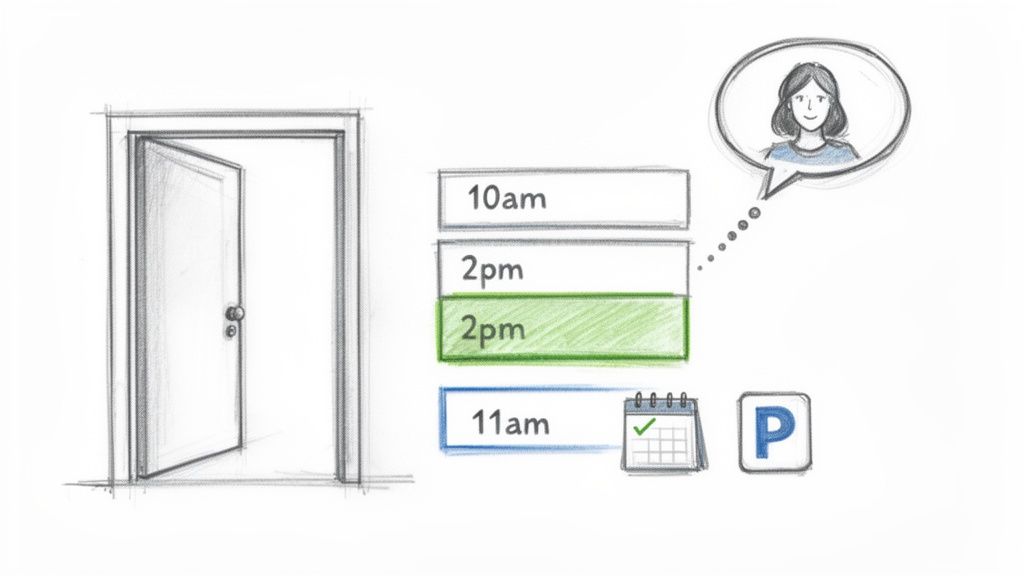
This approach immediately demonstrates efficiency and organisation, reassuring potential buyers that their time is valued. By offering clear options and helpful information like parking availability upfront, it sets a professional tone and significantly increases the likelihood of a prospect attending the viewing, with some firms reporting up to a 70% attendance rate using this method.
Strategic Breakdown
- Propose Concrete Options: Offering specific times like "Hi [Name]… I have openings this Saturday at 10am or 2pm, or Sunday at 11am…" simplifies the decision-making process for the caller, avoiding the back-and-forth of open-ended scheduling.
- Provide Logistical Value: Including practical details such as "Parking is available on [Street]…" shows foresight and a commitment to providing a smooth, positive client experience from the very first interaction.
- Reinforce Property Value: Briefly mentioning a key feature relevant to their likely profile, like "The property is perfect for a young family…", personalises the message and keeps their interest high.
Key Tactic: The effectiveness of this voicemail message example comes from its Confirm > Propose > Inform > Action framework. This sequence transforms a simple response into a powerful scheduling tool that boosts conversion rates.
Actionable Tips for Implementation
For maximum impact, offer two or three distinct viewing times to provide choice without overwhelming the prospect. Always mention any necessary documents they might need for an inspection and briefly highlight a key property feature that aligns with the inquiry type. This small detail shows you’ve considered their needs.
Using a system like OnSilent's calendar sync is crucial to prevent double-bookings when leaving multiple messages. This allows you to automatically route calls and use pre-recorded scripts for specific properties, with some OnSilent users scheduling over 100 viewings monthly through this automated process. To further secure attendance, follow up with an automated SMS confirmation 24 hours prior to the appointment.
6. Voicemail for Missed Call Callback (OnSilent AI-Assisted)
An OnSilent AI-Assisted voicemail for a missed call callback is an automated yet personalised message sent when the system instantly returns a call you couldn't answer. Its purpose is to immediately re-engage a potential client, transparently explain that an AI assistant is helping out, and gather initial information to make the eventual human follow-up faster and more effective. This method works by ensuring no lead ever feels ignored, providing an instant response that qualifies their needs.
This technology positions your business as highly efficient and modern, using automation to guarantee responsiveness without sacrificing the human touch. By clearly stating its role and purpose, the AI assistant manages expectations and seamlessly bridges the gap until a team member can personally connect, recovering what would otherwise be a lost opportunity.
Strategic Breakdown
- Immediate Re-engagement: The AI calls back within moments of a missed call, capturing the lead's attention while their intent is still high. The message "Hi [Name], I'm the AI assistant for [Business Name]. I noticed you called earlier…" instantly acknowledges their attempt to connect.
- Transparent Automation: Clearly identifying as an AI assistant builds trust and prevents confusion. This transparency is key to a positive customer experience, setting the stage for a smooth handover to a human.
- Initial Lead Qualification: Asking a simple question like "…could you let me know if you're calling about a property, scheduling, or something else?" helps categorise the inquiry, allowing your team to prioritise and prepare for the callback.
Key Tactic: The core strategy here is Instant Acknowledgment > AI Transparency > Initial Qualification > Seamless Handover. This sequence transforms a missed call from a lost lead into a warm, pre-qualified opportunity for your team.
Actionable Tips for Implementation
To maximise the effectiveness of this voicemail message example, it's crucial to be transparent about the use of AI while maintaining a professional and helpful tone. Clearly outline the next steps, informing the caller when they can expect a human follow-up. For instance, real estate firms using this are recovering 30-40% of previously missed leads.
Leverage a system like OnSilent's AI Voicemail Assistant to automatically filter spam and ask brief qualifying questions, which can save service businesses up to eight hours per week. Beyond optimising communication, understanding the broader impact of AI across various sectors provides valuable context for how this technology is reshaping client engagement. This organised approach ensures every inbound inquiry receives a prompt and productive response.
7. Voicemail for Outreach Campaign Follow-up
A voicemail for an outreach campaign is a strategically crafted message designed for large-scale, systematic prospecting. Unlike a one-off call, this voicemail is part of a coordinated campaign targeting specific segments, such as expired real estate listings or property managers in a certain suburb. Its purpose is to deliver a hyper-relevant, value-driven pitch that feels personal, even when deployed at scale. This method works by leveraging data to segment audiences and tailor the message for maximum impact.
This approach transforms cold outreach into a warm, targeted introduction. By referencing specific details relevant to the prospect (like their property or professional role), the message immediately demonstrates research and relevance, cutting through the noise of generic sales calls. It positions the sender as a specialist with a direct solution to a potential need, paving the way for a higher response rate.
Strategic Breakdown
- Hyper-Segmentation: The message's effectiveness hinges on tight audience segmentation. A message for an expired listing ("…noticed your property at [Address]…") is fundamentally different from one for a property manager ("…reaching out to property managers in the [Suburb] area…"), ensuring relevance.
- Quantifiable Value Proposition: Including a specific success metric, such as "…successfully sold 5 similar properties this quarter…" or "…helped over 50 properties with [specific benefit]…", provides tangible proof of your expertise and builds immediate credibility.
- Clear, Low-Friction Call-to-Action: The ask is simple and non-committal. Phrasing like "Are you open to a quick chat this week?" lowers the barrier to entry and makes it easier for the prospect to say yes.
Key Tactic: The core strategy is Segment > Personalise > Quantify > Propose. This structured approach ensures that even at scale, each voicemail message example resonates as a bespoke, high-value communication, driving response rates far above the industry average.
Actionable Tips for Implementation
For maximum impact, use a platform like OnSilent’s Outreach Campaign feature to schedule calls at optimal times and automatically deploy different pre-recorded messages to your segmented lists. This allows for A/B testing variations in your script to see which quantifiable metrics or calls-to-action perform best.
Always follow up on non-responders with a multi-channel approach, such as a targeted email or SMS within 48 hours, to reinforce your message. Remember to include a clear opt-out option to maintain compliance and respect the prospect's inbox. This organised, data-driven methodology is why users often see response rates of 12-18%, a significant leap from the typical 2-3% industry average for cold outreach.
8. Customer Testimonial Request and Feedback Voicemail
A customer testimonial request voicemail is a proactive message sent to recent clients to solicit reviews, feedback, or testimonials. Its primary purpose is to capture positive experiences while they are still fresh, building social proof and improving online reputation. This method works by making a personal, timely request that shows the client their opinion is valued, rather than sending an impersonal, automated email that is easily ignored.
This approach capitalises on the peak of customer satisfaction, typically within 48 hours of service completion, to generate authentic and powerful testimonials. By making the process simple and expressing genuine appreciation, it significantly increases the likelihood of a positive response, turning happy customers into active brand advocates.
Strategic Breakdown
- Timeliness Maximises Impact: Making the request shortly after a successful transaction or project completion ("Hi [Name], I hope you're happy with the work we completed on [property/project]…") ensures the positive experience is top of mind.
- Remove All Friction: Providing a direct link to the review platform ("Could you share a quick review on Google? Here's the link…") eliminates extra steps for the customer, drastically boosting conversion rates.
- Explain the 'Why': Briefly explaining how their feedback helps others ("Your feedback helps other families in the area feel confident working with me…") adds purpose to the request and makes the customer feel like they are contributing to the community.
Key Tactic: The effectiveness of this voicemail message example hinges on its sequence: Appreciate > Personalise > Simplify > Explain. This flow makes the customer feel valued and motivated to share their positive experience, directly contributing to your business's credibility and local SEO.
Actionable Tips for Implementation
To maximise the success of your feedback requests, personalise the message with a specific detail from your recent interaction to show you remember them as an individual, not just a transaction. Keep the voicemail clear and concise, aiming for under 45 seconds to respect their time and ensure the core message is heard.
For service-based businesses like tradespeople and real estate agents, where reputation is paramount, this strategy is essential. Using a system like OnSilent's voicemail routing can automate sending these pre-recorded, personalised messages post-completion. This ensures every client receives a timely, professional request, systematically building a powerful portfolio of five-star reviews and strengthening your online presence.
9. Referral Request and Incentive Voicemail
A referral request and incentive voicemail is a strategic message aimed at converting satisfied customers into an active lead generation channel. Its purpose is to politely and effectively ask past clients for referrals while offering a tangible reward, thereby motivating them to act. This method works by leveraging the trust you have already built, making the request feel like a natural extension of your positive relationship rather than an unsolicited sales pitch.
This approach transforms your customer base from passive admirers into proactive advocates. By clearly stating a valuable incentive and making the referral process simple, you remove friction and empower clients to share your services with their networks, which is crucial for service professionals like tradies and real estate agents seeking cost-effective growth.
Strategic Breakdown
- Leverage Existing Trust: The request comes after a successful transaction or project, such as "Hi [Name], working with you on your recent purchase was a pleasure…", which taps into their recent positive experience.
- Provide a Clear Incentive: Vague promises are ineffective. Specify the reward to create a strong motivator, like "For each successful referral, I'll send you a $100 gift card…". This clarity drives action.
- Simplify the Process: The easier it is to refer, the more likely it will happen. Offering a simple instruction like "Just have them mention your name or forward their contact info to me…" removes any guesswork.
Key Tactic: The power of this voicemail message example is its formula: Acknowledge Relationship > State the Ask > Present Incentive > Simplify Action. This sequence makes the request feel personal, valuable, and easy to fulfil.
Actionable Tips for Implementation
To maximise the effectiveness of your referral voicemails, ensure the incentive is genuinely appealing to your client base. For a tradie, offering a client a 10% discount on their friend's project and a gift card for themselves is a powerful dual incentive. In real estate, where referrals can be worth thousands, a more substantial reward is often necessary to motivate action.
Using a system like OnSilent's CRM integration allows you to automatically track referrals, ensuring no lead is missed and that referrers are promptly rewarded. This organised follow-up maintains a high-quality perception of your brand and reinforces the value of sending new business your way, solidifying a sustainable lead pipeline.
10. Post-Service Problem Resolution and Follow-up Voicemail
A post-service problem resolution voicemail is a critical communication tool used to address and resolve customer issues after a service has been delivered. Its purpose is to demonstrate accountability, offer a clear solution, and rebuild trust after a negative experience. This method works by proactively acknowledging the problem, taking ownership, and outlining immediate, concrete steps to make things right, effectively preventing customer churn and negative online reviews.
This proactive approach transforms a potentially damaging situation into an opportunity to showcase exceptional customer service. By addressing the issue head-on with a personal call, businesses show they value their customers' satisfaction over simply defending their work. This organised and empathetic response can often strengthen the customer relationship more than if the problem had never occurred.
Strategic Breakdown
- Acknowledge and Own: Start by clearly stating the reason for your call, acknowledging the specific issue without making excuses. "Hi [Name], I wanted to personally follow up on the issue you experienced with our work…" shows you are taking the complaint seriously.
- Provide a Concrete Solution: Vague apologies are insufficient. Offer a specific, actionable solution, such as "I've reviewed the situation and I'm going to [specific solution]. I'll have [team member] contact you tomorrow to schedule a time."
- Set a Clear Timeline: Giving a precise timeline for resolution manages expectations and demonstrates urgency, reassuring the customer that their problem is a priority.
Key Tactic: The core strategy here is Acknowledge > Apologise > Act > Follow-up. This framework shifts the conversation from blame to resolution, proving your commitment to customer satisfaction and protecting your business's reputation.
Actionable Tips for Implementation
To make these voicemail message examples effective, call within 24 hours of identifying the problem to convey urgency. Be specific about what went wrong to show you understand their frustration. After implementing the solution, make a final follow-up call to confirm their complete satisfaction, closing the loop professionally.
Using a CRM to document the issue and resolution helps identify recurring problems and improve your service delivery over time. For businesses managing multiple client interactions, tools like OnSilent’s callback system can ensure you successfully connect with the customer, while detailed call logs provide a record of your commitment to resolving their concerns.
10-Point Voicemail Message Comparison
| Template | Implementation Complexity | Resource Requirements | Expected Outcomes | Ideal Use Cases | Key Advantages |
|---|---|---|---|---|---|
| Professional Real Estate Lead Qualification Voicemail | Low–Moderate — scripted with property-specific edits | Agent time for customization, optional CRM integration | Higher callback & qualification (≈35–45%) | Real estate agents, property managers, mortgage brokers | Professional impression, documented trail, increased callbacks |
| Service Business Emergency Response Voicemail | Moderate — requires emergency protocols and clear thresholds | Staffing or escalation pathways, updated emergency contacts, 24/7 routing | Rapid response expectations; emergency response rate 85–95% | Tradies (plumbers, electricians), HVAC, emergency services | Reduces customer anxiety, clear escalation, builds reliability |
| Appointment Confirmation and Reschedule Voicemail | Low — templated reminders with timing rules | Calendar/calendar-sync, automation platform integration | Fewer no-shows (20–35% reduction) | Property managers, health professionals, service providers | Reduces no-shows, saves admin time, improves punctuality |
| Lead Nurture Follow-up Voicemail for Inactive Prospects | Moderate — needs personalization and historical context | CRM with interaction history, value-add content, campaign automation | Re-engagement uplift (≈12–20%) | Real estate agents, mortgage brokers, property managers | Revives dormant leads with low-pressure value offers |
| Property Viewing Request Response Voicemail | Low–Moderate — scheduling options and property specifics | Calendar sync, tailored property scripts, SMS confirmations | Higher viewing attendance (65–75%) | Real estate agents, strata managers, property managers | Streamlines booking, reduces back-and-forth, improves attendance |
| Voicemail for Missed Call Callback (OnSilent AI-Assisted) | High — AI callback, qualification and handoff logic | AI platform, compliance disclosures, human handoff process | Lead recovery boost (30–40%); 24/7 availability | Real estate, tradies, service professionals, health providers | Ensures no lead missed, qualifies calls automatically, scalable |
| Voicemail for Outreach Campaign Follow-up | Moderate–High — segmentation and campaign management | Accurate contact data, campaign tooling, tracking metrics | Higher response rates (12–18% targeted) vs cold calling | Agents, mortgage brokers, tradies, service providers | Scalable targeted prospecting with measurable results |
| Customer Testimonial Request and Feedback Voicemail | Low — simple scripted ask with links/options | Follow-up channels (email/SMS), review links, optional incentives | Review generation 15–25% with incentive; 5–10% without | Real estate, tradies, service providers, health professionals | Builds social proof and local SEO; supplies marketing content |
| Referral Request and Incentive Voicemail | Low–Moderate — clear incentive and tracking required | Incentive fulfillment, CRM tracking, simple referral process | High referral conversion (≈40–60%) | Real estate agents, tradies, brokers, service providers | Generates warm leads, lowers CAC, builds advocacy |
| Post-Service Problem Resolution and Follow-up Voicemail | Moderate — requires diagnosis, solution and timelines | Support staff, CRM documentation, timely follow-up tools | Retention/recovery 60–75% when handled promptly | Tradies, property managers, service providers, real estate | Prevents negative reviews, converts complaints into loyalty |
Putting It All Together: Your Blueprint for a High-Converting Voicemail Strategy
We've explored a comprehensive library of voicemail message examples, moving far beyond generic greetings into the realm of strategic communication. You are now equipped with ten distinct scripts, each designed for a specific business scenario, from qualifying a hot real estate lead to de-escalating a post-service issue. This collection is more than just a list of templates; it’s a strategic framework for transforming a passive communication channel into an active business development tool.
The central lesson is clear: a voicemail is not a dead end. It is a vital, often underestimated, touchpoint in your customer's journey. Each message you leave is an opportunity to build trust, convey professionalism, and guide the listener toward a desired action. A well-crafted voicemail can be the critical factor that turns a missed call into a confirmed appointment, a cold lead into a warm prospect, or a satisfied client into a powerful advocate for your brand.
Core Principles for Voicemail Mastery
Throughout the diverse examples provided, from the urgency of an emergency trade service to the nuance of a mortgage broker follow-up, several core principles have emerged as non-negotiable for success. Mastering these will fundamentally change how you perceive and utilise your voicemail system.
- Clarity is Paramount: Your message must be direct and easy to understand. State your name, your company, and the purpose of your call within the first few seconds. Avoid jargon and convoluted sentences that force the listener to replay the message.
- Conciseness Commands Attention: Respect the listener's time. A powerful voicemail is typically under 30 seconds. This brevity ensures your entire message is heard and demonstrates that you are organised and value their attention.
- A Specific Call to Action is Essential: Never end a voicemail with a vague "call me back." Instead, provide clear, simple instructions. Suggest a specific next step, like "reply to the SMS I've just sent with a 'YES'," or "visit our website at [your website] to book directly."
- Empathy Builds Connection: Your tone matters immensely. Whether you are confirming an appointment or handling a complaint, a calm, professional, and empathetic voice builds rapport and makes the listener more receptive to your message.
From Examples to Implementation: Your Action Plan
Having access to these voicemail message examples is the first step; the next is implementation and optimisation. The true power lies not just in copying these scripts, but in customising and integrating them into a seamless workflow that saves you time and captures more opportunities. This is where strategic automation becomes your greatest asset.
Strategic Insight: The most successful professionals don't just record a better voicemail; they build an intelligent system around it. They use tools to ensure the right message is delivered at the right time, every time, without manual effort.
Think about how you can integrate these scripts into your daily operations. Can you use a system like OnSilent to automatically route certain call types to a specific pre-recorded message? For instance, a "request for quote" call could trigger a voicemail that instantly directs the caller to an online form while simultaneously sending them an SMS link, capturing the lead's details before you even listen to the message.
The key is to view each script not as a standalone message, but as a component in a larger customer communication engine. A/B test your messages, track callback rates, and analyse which scripts generate the best responses for your specific clientele, whether they are property investors, strata managers, or tourism operators. This data-driven approach will help you continuously refine your strategy for maximum impact. A small, focused investment in optimising your voicemail process will pay enormous dividends in customer satisfaction, operational efficiency, and sustainable business growth.
Ready to stop chasing missed calls and start converting them automatically? OnSilent – AI Personal Assistant integrates these powerful voicemail strategies directly into your workflow, ensuring every caller receives a professional, actionable response 24/7. Discover how our intelligent routing and automated SMS follow-ups can turn your voicemail into your most reliable lead-capture tool by visiting OnSilent – AI Personal Assistant today.