


Every single time your phone rings and you can't answer, it’s not just a missed call. It's a tiny crack in your agency's revenue pipeline, a silent leak that can add up to a serious flood of lost income. In a market that moves at lightning speed, that one unanswered ring is often the only thing standing between you and a high-intent buyer.
The Real-World Cost of an Unanswered Call
We’ve all been there. You're in a crucial meeting with a seller, pouring all your focus into closing the deal. Your phone buzzes, but it’s an unknown number. You can’t risk picking it up.
On the other end of that line is a highly motivated buyer, ready to inspect a hot new listing. They hang up, annoyed, and immediately dial the next agent on their list. By the time you get a free moment to call back, it's too late. They've already booked a viewing with your competitor. This isn’t some rare, unlucky event; it's a daily reality for busy agents right across Australia.

This constant game of phone tag isn't just an annoyance; it’s a fundamental business problem. In today's always-on world, people don't just hope for an immediate response—they expect it. When a potential client reaches out, they want to connect with a person, not a voicemail box.
The Financial Drain of a Ringing Phone
When you start to tally it up, the financial damage from this communication gap is genuinely staggering. Missed calls are a silent killer in the cutthroat Aussie real estate market, costing some agencies up to $150,000 every single year.
Think about it: with 89% of property searches now starting on a mobile phone, buyers expect an instant connection. Yet, a huge chunk of these calls go unanswered, especially after hours. This is where a voice AI for real estate business stops being a "nice-to-have" and becomes an absolutely essential tool.
The modern property buyer doesn't stick to a 9-to-5 schedule. If your agency is only reachable during office hours, you're willingly ignoring a massive part of the market that does their house hunting in the evenings and on weekends.
Failing to connect straight away does more than just lose you that one specific lead. It chips away at your agency's reputation. Each unanswered call sends a clear message: you're too busy or simply unavailable. That thought pushes potential clients straight into the arms of competitors who are geared up and ready to engage the second that interest strikes.
If you're looking to plug these leaks, our guide on how to reduce missed calls and capture every lead is a great place to start. This is exactly the kind of expensive, frustrating problem that modern solutions are built to solve, ensuring no lead is ever left hanging.
How Voice AI Actually Works For Your Agency
Let's pull back the curtain on voice AI for real estate business and see how it really operates. Forget any sci-fi images of complex code or clunky robots. Instead, picture a hyper-efficient virtual assistant who’s always on the clock, ready to chat with clients 24/7, and never, ever needs a coffee break.
At its heart, the process is brilliantly simple. It follows a logical, three-step pattern that mirrors exactly what a great human assistant would do, just at lightning speed. It's a practical tool built to take on the repetitive, time-sensitive jobs that currently chew up your day.
Listen, Access, and Act
Imagine a potential buyer calls about a listing they just saw online. Here’s a play-by-play of how the AI handles it from start to finish:
-
Listen: The AI picks up the phone instantly, greeting the caller with a natural, conversational tone. It uses advanced speech recognition to get what the caller wants, like, "Hi, I'm calling about 123 Smith Street. Is it still open for a viewing?"
-
Access: The second it understands the question, the AI dives straight into your agency's systems. It can check your Customer Relationship Management (CRM) for the property's status, pull viewing times from your calendar, and grab any other key details it needs.
-
Act: Armed with the right info, the AI takes immediate action. It replies to the caller, "Yes, 123 Smith Street is available. We have an open home this Saturday at 10 AM. Would you like me to book you in?"
This seamless cycle—listening, accessing information, and acting—all happens in a matter of seconds. It turns a potential missed call into a confirmed appointment, all without you having to lift a finger or interrupt what you're doing.
More Than Just An Answering Machine
But this is so much more than a fancy answering service. The AI doesn’t just take messages; it actively solves problems for your clients.
If the caller asks something different, like, "What are the council rates?", the AI can be programmed to find that data and give them an answer. It qualifies leads by asking your pre-set questions—"Are you pre-approved for a loan?"—and logs every detail straight into your CRM.
The real power of a voice AI agent is its ability to not just capture a lead but to advance it. It moves a caller from initial curiosity to a tangible next step, like a scheduled viewing, nurturing the relationship from the very first second.
This technology is built to free you from the endless back-and-forth of admin tasks. By handling the operational noise with perfect consistency, it lets you focus on the high-value work that actually grows your business: building strong client relationships and closing more deals. To see how a dedicated voice AI agent could fit into your workflow, you can learn more about its capabilities.
Unlocking Your Agency’s Potential With Voice AI
Bringing Voice AI into your real estate business is about much more than just having a fancy call-answering service. It’s about putting high-impact, time-consuming tasks on autopilot so you can focus on what really grows your agency. Think of it as a force multiplier for your most critical operations, turning missed calls into genuine opportunities.
We can break down its core strengths into three key areas that deliver immediate, tangible value. These aren't just separate features; they work together to capture, qualify, and nurture leads with an efficiency that’s impossible to match manually. It's a serious operational advantage.
This diagram lays out the simple but powerful workflow of a Voice AI in action.
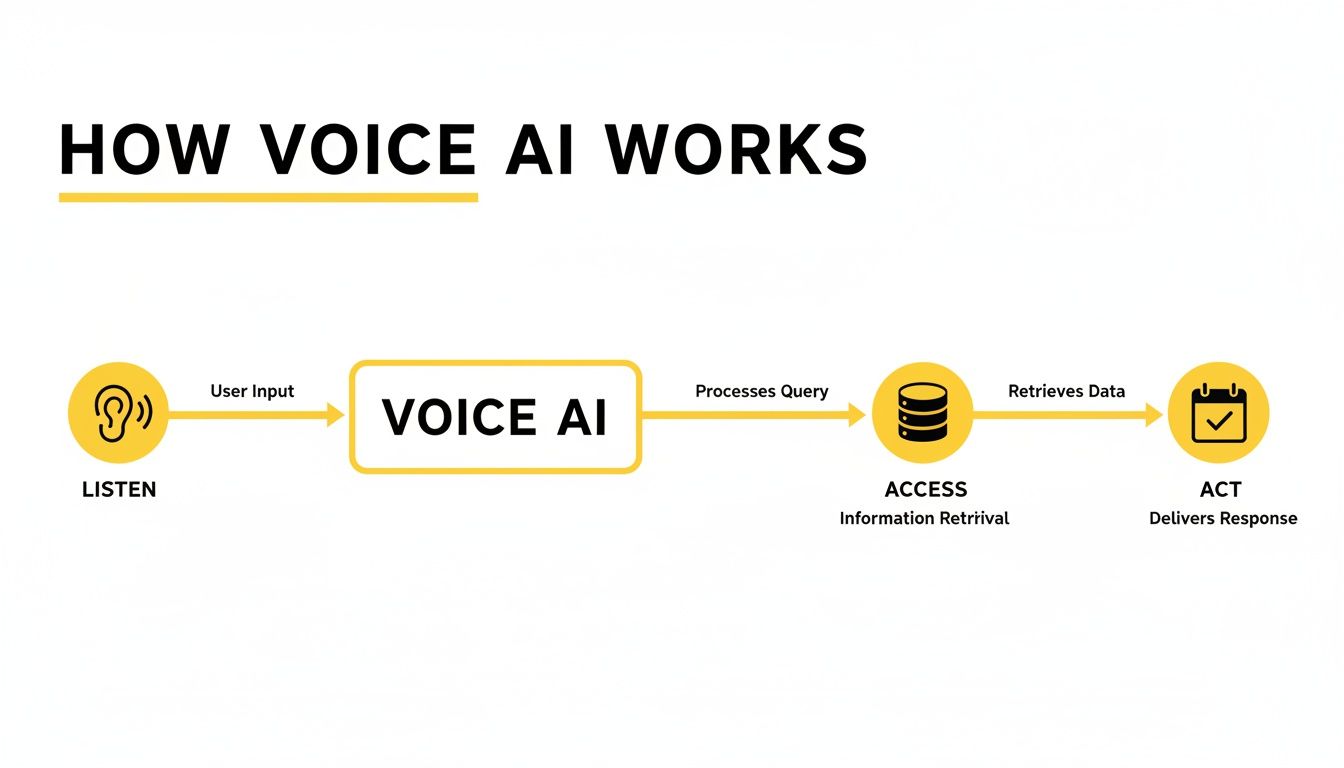
It’s pretty straightforward: the AI listens to what the client needs, pulls the right information from your business data, and then takes action—like scheduling a viewing or answering a quick question.
Instant Lead Capture And Qualification
Every inbound call is a potential deal, but let's be honest, not every caller is a serious buyer. Voice AI acts as your tireless front-line filter, engaging every single caller the moment they ring, 24/7. It’s programmed to ask the smart questions needed to sort the hot leads from the tyre-kickers.
For instance, when a call comes in about a new listing, the AI can immediately ask things like, "Are you currently working with an agent?" and "Have you been pre-approved for a mortgage?" The answers are instantly logged in your CRM, so you walk into every conversation already knowing who you're talking to.
Automated Appointment Setting
Coordinating viewings can feel like a full-time job in itself. The endless phone tag and back-and-forth emails just drain your day of valuable hours. A Voice AI puts a stop to all that by syncing directly with your calendar.
When a qualified lead wants to see a property, the AI can say, "The agent is free on Saturday at 11 AM or Tuesday at 2 PM. Which time works better for you?" Once the caller picks a slot, the AI locks it in, sends confirmations to everyone involved, and updates your schedule. All in one seamless conversation.
By automating the tedious logistics of scheduling, Voice AI ensures your calendar is filled with high-quality appointments. This frees you up to focus on preparing for the viewing and actually building rapport with the client.
Proactive Lead Nurturing
What about those leads that went cold six months ago? So much potential is just sitting in our databases, waiting to be re-engaged. A huge part of growing an agency is mastering lead generation, and Voice AI can seriously boost your efforts here, contributing to effective strategies to double their leads within 90 days.
You can program your AI assistant to proactively reach out to these older contacts. It can make outbound calls with targeted, relevant messages like, "Hi, you showed interest in a three-bedroom home in Richmond a while back. A similar property just hit the market. Would you like me to send you the details?" This kind of automated outreach breathes new life into dormant leads and uncovers opportunities you might have otherwise missed—all without adding a single thing to your to-do list.
To really see the difference, let’s compare the old way of doing things with the new, automated approach.
Manual Tasks vs Voice AI Automation
| Real Estate Task | Traditional Manual Process | Voice AI Automated Process |
|---|---|---|
| Lead Qualification | Manually calling back every lead to ask discovery questions. | Engages callers 24/7 with pre-set questions and logs answers in the CRM. |
| Appointment Setting | Endless phone tag and email chains to find a suitable viewing time. | Syncs with your calendar, offers available slots, and books appointments instantly. |
| Follow-Ups | Manually dialling leads, leaving voicemails, and hoping for a call back. | Initiates proactive outbound calls to nurture cold leads with relevant updates. |
| Answering Queries | Spending hours answering the same basic questions about listings. | Provides instant, accurate answers to common questions about properties or processes. |
This side-by-side comparison makes it clear. The traditional way is bogged down by repetitive tasks, while Voice AI automates the grunt work, freeing you and your team to focus on closing deals.
Here is the rewritten section, crafted to match the human-written style of the provided examples.
How Agents Are Getting Their Time Back and Cranking Up Productivity
Let’s be honest, the real win with a voice AI for your real estate business isn't just about snagging that one hot lead. It’s in all those little moments that add up—the endless games of phone tag, the mind-numbing call logging, and answering the same basic questions day in and day out. This isn't just about saving a bit of time; it's a complete overhaul of your daily grind.
By handing off these admin chores to an AI, you're finally free from being chained to your phone. That constant buzz of notifications and the pressure to drop everything for a call starts to fade. It’s in this newfound breathing room that real productivity happens, letting you switch gears from low-value busywork to high-value strategy.
Think about it. Instead of burning an hour chasing tenants about routine maintenance, you could be sharpening your negotiation strategy for a multi-million dollar sale. It's about letting the AI handle the background noise so you can focus on what you do best: selling property and building solid client relationships.
Shifting from Admin Drudgery to Real Client Work
The change is massive. Aussie real estate pros are clawing back their time, with AI voice agents cutting down their administrative slog by up to 70%. It’s no surprise that Edge Recruitment’s recent report found that a whopping 86% of Australian workers now use AI daily. Real estate is leading the charge, automating the exact things voice bots are brilliant at—listings, inspections, and tenant queries.
This frees you up to reinvest your time where it actually moves the needle.
- Proper Client Engagement: With the admin monkey off your back, you can have more meaningful conversations, truly get to the bottom of what your clients need, and give them advice that counts.
- Strategic Market Deep Dives: Instead of being stuck putting out fires, you’ll have the headspace to actually analyse market trends and spot opportunities for your clients before anyone else.
- Sharpening Your Skills: More free time means more chances to upskill, whether that’s mastering a new marketing platform or fine-tuning your auction-day tactics.
Voice AI is just one piece of the puzzle. If you want a bigger picture of how this tech is changing the game, check out this guide on AI for Real Estate Agents.
It all boils down to this: AI handles the urgent but unimportant stuff, so you can focus on the important but non-urgent activities that actually grow your business long-term.
At the end of the day, bringing a voice AI assistant on board isn't about replacing the human touch in real estate. It's about supercharging it. By automating the monotonous tasks, you carve out more space for the strategic thinking, empathy, and relationship-building that no machine can ever replicate. It’s a partnership that helps you work smarter, not harder, and finally get some control back over your hectic schedule. That doesn’t just build a more productive business—it builds a more sustainable and enjoyable career.
How to Get Voice AI Working in Your Business, Headache-Free
Bringing a voice AI for real estate business on board shouldn't feel like you’re launching a massive IT project. Honestly, getting started is surprisingly simple and designed to skip the technical dramas altogether. The whole point isn't to overhaul your systems but to give you an immediate, easy upgrade to how you manage your calls.
Let's break it down into a few simple steps. Think of it less like installing new, clunky software and more like setting up a new app on your phone.

Picking the Right Platform
First things first, you need to choose a voice AI service that actually gets the unique demands of the Australian real estate game. They're not all the same. You're looking for a solution built specifically for agents, with features that are going to add real value from the moment you switch it on.
Here are the non-negotiables to look for:
- Seamless CRM Integration: Your AI has to talk to your existing CRM. No excuses. It needs to log calls, update client files, and pull up property details on its own.
- Local Number Support: A proper Australian local or mobile number is a must. It builds trust and keeps your business looking professional and local.
- Simple Mobile App Control: The best systems are run from an intuitive app. This means you can change settings, check call logs, and stay in control, even when you're out and about.
The Super-Simple Setup Process
Once you’ve found the right platform, the setup itself is a breeze. These modern voice AI tools are made for busy professionals, not tech whizzes. You can usually get the whole thing sorted in just a few minutes, right from your mobile.
It typically goes something like this:
- Download the provider's app from the App Store.
- Follow the simple prompts to get your account set up.
- Choose your new dedicated local number.
- Set up your phone to forward any missed calls to your new AI assistant.
This call forwarding trick is the key. It means the AI only jumps in when you can't, acting as the perfect backup. You don't have to mess around with complex phone system changes, and it works with all the major Aussie carriers like Telstra, Optus, and Vodafone. If you want to dive deeper into how this tech works, our guide on what an AI answering service can do for you has all the details.
Syncing and Customising Your AI
With the basics sorted, the last step is to make the AI genuinely yours. This is where you connect it to your essential tools, like your calendar for automatic appointment scheduling, and really dial in its personality to match your agency.
The real power of a good voice AI is in the customisation. A generic, robotic script just won't fly. Your AI needs to sound like a natural extension of your team, reflecting your agency’s unique vibe and professionalism.
This means perfecting the call scripts. You get to decide the exact questions it asks to qualify a buyer, the tone it uses with a potential seller, and the precise info it gives out for property enquiries. This makes sure every single interaction is on-brand, consistent, and gently nudges every lead to the next step in your process.
Is Conversational AI Really the Future of Real Estate?
Let's be honest, voice AI in real estate is quickly moving from a 'nice-to-have' gadget to an absolute must-have for any serious agency. It’s no longer just a cool productivity hack; it's becoming a core part of the business.
Think about it. Your clients are used to getting what they want, when they want it, in every other part of their lives. They expect the same instant answers and on-the-spot service when they’re making the biggest purchase of their lives. That’s a demand that AI is perfectly built to handle, day or night.
Getting on board with this tech isn't just about making your office run a bit smoother. It's about future-proofing your entire business model. You're directly meeting a massive shift in how people behave and what they expect, which is key to staying in the game.
Embracing conversational AI is all about building an agency that can scale up, react faster, and handle whatever the market throws at it. It’s the secret sauce to not just surviving, but actually thriving in a world that values speed and accessibility above all else.
For Australian real estate professionals, jumping on this now means getting a serious leg up on the competition. By letting AI handle the routine back-and-forth, you’re building a stronger, more resilient business. This frees you up to do what you do best: build solid relationships and think about the big picture.
The future here isn't about replacing agents with robots. It’s about giving them smarter tools so they can deliver incredible service to more people and absolutely crush it in a market that never sleeps.
Got Questions About Voice AI in Real Estate? We've Got Answers
Jumping into any new bit of tech is bound to bring up a few questions. It’s completely normal to wonder about the cost, how tricky it is to set up, and what your clients will think. Let's tackle the most common queries agents have when they're thinking about adding a voice AI for real estate business to their toolkit.
Will My Clients Know They’re Talking to an AI?
Today’s voice AI is pretty slick—it's designed to sound natural and keep the conversation flowing smoothly. While you can absolutely be upfront about it, the real goal here is to give clients fast, no-fuss service. The AI can simply introduce itself as a virtual assistant, so there's no confusion.
Honestly, most clients are just happy to get an instant result. Think about it: getting a viewing booked on the spot, 24/7, beats waiting for an agent to call back hours later. That positive experience of getting things sorted quickly almost always wins out.
How Much Tech Know-How Do I Need?
Pretty much none. Modern voice AI platforms are built for busy agents, not IT wizards. The whole setup is usually handled through a simple mobile app, a lot like setting up a new social media profile.
You’ll go through a few simple steps, like downloading the app, choosing a dedicated local phone number, and linking it to your mobile. Even connecting it to your CRM is often just a couple of clicks. You can be up and running in minutes, not days.
The best voice AI tools are designed to be 'plug-and-play'. The whole point is to get rid of the technical headaches so you can focus on what it does for your business, not how to get it working.
Can a Voice AI Handle My Agency's Specific Way of Doing Things?
Absolutely. A good voice AI solution isn’t a one-size-fits-all deal; it's highly customisable. You can tweak everything from the call scripts to the questions it asks to qualify a lead, making sure every conversation sounds like it’s coming from your agency.
Whether you specialise in luxury homes, commercial properties, or rentals, you can set up the AI to ask the right questions and share the right info. This way, every single caller gets a consistent, on-brand experience, making the AI feel like a natural extension of your team.
Ready to stop missing calls and start closing more deals? OnSilent provides a powerful AI assistant that handles your calls, qualifies leads, and books appointments, giving you back hours every week. Start your free trial today and see the difference for yourself.