

So, what exactly is a smart communications platform built for strata managers? Think of it less as a piece of software and more as a digital command centre for your entire operation. It's an intelligent system designed to bring all your interactions—phone calls, emails, maintenance requests, you name it—into one central, automated, and trackable place. It replaces the chaos of overflowing inboxes and sticky-note reminders with clean, auditable workflows.
The Hidden Costs of Outdated Strata Communication
Picture an old-school switchboard operator, frantically plugging and unplugging wires, trying to connect urgent calls while a dozen other lines are ringing off the hook. That's pretty much the daily reality for many strata managers stuck with outdated communication methods. Every missed call or buried email isn't just a minor headache; it's a potential risk to the business and its hard-earned reputation.

The fallout from this operational chaos is more than just daily frustration. It shows up as real, tangible costs that quietly eat away at your profitability and chip away at resident trust.
Why Traditional Tools Just Can't Keep Up Anymore
The strata sector is booming. With around one in ten Australians now living in strata communities, the industry is juggling more than 3 million lots across the country. This explosive growth puts enormous pressure on traditional tools like shared inboxes and basic phone lines, which were never built to handle the sheer volume and complexity of modern strata management.
This growth translates directly into a higher volume of everything: more maintenance requests, more questions about by-laws, and more after-hours emergencies. Without a system designed for this scale, strata managers are left fighting an uphill battle.
The Real Price of Communication Chaos
The consequences of sticking with inefficient systems hit your bottom line and operational integrity hard. These aren't just small inconveniences; they are major business risks.
- Lost Opportunities: A critical maintenance request for a burst pipe gets lost in a crowded inbox. The delay turns a manageable issue into thousands of dollars in property damage and hefty insurance claims.
- Compliance Risks: Without a clear, searchable audit trail of every conversation, defending your actions in a dispute is nearly impossible. A simple "he said, she said" scenario can quickly spiral into a costly and stressful legal battle.
- Eroding Resident Trust: When response times are slow and communication feels inconsistent, residents start to feel ignored. This frustration often leads to high owner turnover and a damaged reputation that’s tough to repair.
The constant juggling of messages and manual follow-ups creates a state of perpetual interruption. Each distraction pulls your team's focus away from the high-value work that actually matters, compounding inefficiency throughout the day.
To get a sense of just how damaging this can be, it's worth looking at the true cost of inefficiency across different professional services—it's not just a strata problem. This operational overload is precisely what a smart communications platform built for strata managers is designed to solve. It’s the definitive answer for turning the growing demands of strata communities from chaos into clear, actionable workflows. If you want to dig deeper into the numbers, it's also helpful to understand the cost of interruptions at work.
What Is a Smart Communications Platform?
Let's cut through the jargon and talk about what a smart communications platform actually is for a busy strata business. It's so much more than another bit of software; think of it as an intelligent digital concierge for your entire portfolio, one that works 24/7 to catch, sort, and direct every single message that comes your way.
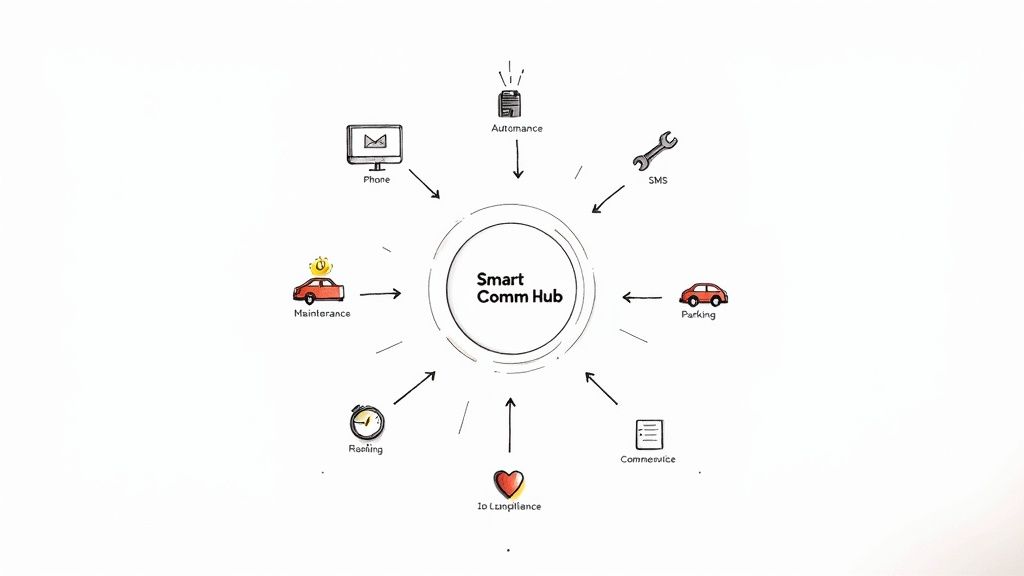
This platform becomes your central command centre, intelligently processing every phone call, email, and text message your agency receives. It's built from the ground up for the unique chaos of strata management, bringing some much-needed order to the daily communication storm.
It's More Than Just a Shared Inbox
A standard shared inbox or a generic CRM just lumps everything together. A critical plumbing emergency, a minor parking complaint, an invoice query—it all lands in one big pile. This leaves your team to manually sift through it all, trying to figure out what’s important. This is where a smart communications platform built for strata managers is a completely different beast.
This kind of tech uses strata-specific logic to actually understand the context of each message. It knows the difference between a 'burst pipe' and a 'noisy neighbour,' automatically figuring out how urgent each issue really is.
At its heart, a smart platform is your first line of defence—an expert at filtering and triaging. It makes sure the genuinely urgent stuff gets escalated immediately, while routine queries are properly logged and assigned so nothing ever slips through the cracks.
Picture this: a panicked resident leaves a voicemail about a water leak. The system doesn’t just sit on the message. It can transcribe the audio, pick up keywords like "leak" or "flood," and instantly create a high-priority job for the on-call maintenance team. A complaint about a by-law breach, on the other hand, might get turned into a standard-priority ticket for the assigned strata manager to look at during business hours.
Creating a Unified Command Centre
A smart platform pulls all your different communication channels into one cohesive system. This consolidation is absolutely vital for keeping control and having clear visibility as your portfolio grows.
Here’s how it builds a true command centre:
- Centralised History: Every single interaction—call, text, or email—related to a specific lot or building is kept in one searchable timeline. No more digging through different inboxes to piece together a conversation.
- Intelligent Routing: The system automatically sends messages to the right person or department based on rules you set. This means maintenance issues go straight to the facilities team, while levy queries are routed to accounts.
- Automated Audit Trails: Every action is logged, creating a tamper-proof record that’s invaluable for compliance and resolving disputes down the track.
This organised approach completely changes how your team works. Instead of constantly reacting to an unfiltered flood of messages, they can proactively manage a prioritised list of tasks. Of course, while a smart platform offers all these advanced features, it needs a solid and reliable fundamental network infrastructure to work its magic. The platform's ability to handle calls is also a huge part of the puzzle, and you can learn more about how a professional call management system underpins this whole process.
Ultimately, it turns a chaotic environment into a streamlined and accountable operation.
Core Features That Transform Daily Strata Workflows
A smart communications platform designed for strata isn't just another inbox organiser. It’s about fundamentally changing how you and your team get through the day. Let's move past the theory and look at the specific, intelligent features that tackle the most persistent headaches in strata management head-on. Each tool is built to do more than just add convenience—it’s there to reclaim time, slash risks, and lift the quality of service across your entire portfolio.
Picture a typical Monday morning. The inbox is overflowing, voicemails are stacked up, and your team is already playing catch-up from the moment they walk in. This is exactly where a smart platform starts making a real difference, turning that reactive chaos into proactive control.
Turning Voicemails into Actionable Tasks
Missed calls are a massive source of stress and, frankly, a huge risk. A resident might be reporting an urgent leak, or a contractor could be trying to confirm access for a job. Having to listen to every single voicemail one by one is a slow, manual grind that creates an instant bottleneck.
A smart platform flips this on its head with AI-powered call transcription. Instead of a manager having to stop what they're doing to listen to a two-minute message, the system instantly converts the audio into text.
- Scenario: An after-hours call comes in from a resident at 123 Smith Street, reporting that the garage door is stuck open.
- The Old Way: A manager finds the voicemail the next morning, listens to it, scribbles down the details, hunts for the right contractor's number, and then finally makes the call. Best case scenario, this takes 15-20 minutes, not even counting the time it takes to actually reach the contractor.
- The Smart Way: The voicemail is instantly transcribed and pops up as a readable message. The AI spots keywords like "garage door" and "stuck open," automatically creating a maintenance task and flagging it as medium priority.
With this single feature, a passive message becomes an active, trackable task before a human even needs to get involved. It's the first step toward building a more responsive and efficient workflow.
Intelligent Triage for Faster Resolutions
Once a message is received and understood, the next hurdle is getting it to the right person. In a traditional setup, this means a manager manually forwarding emails or making calls—a process that's not only a time-sink but is also wide open to human error.
This is where intelligent message triage becomes a total game-changer. The platform acts like an expert administrator who knows exactly who needs to see what, instantly. By setting up simple, predefined rules, the system can automatically analyse an incoming message and route it to the correct team member or even an external contractor.
Think of it as a digital postmaster for your strata agency. It doesn't just receive the mail; it reads the address, understands the content's urgency, and delivers it directly to the recipient's desk, bypassing the messy central sorting room entirely.
This automated routing makes sure nothing gets lost in the shuffle and that every issue is handled by the most qualified person. This level of organisation is a core part of effective strata management automation, building a reliable, repeatable system for every single request.
Before we move on, let's quickly compare the old grind with the new, smarter approach. It really highlights the efficiency gains we're talking about.
Traditional Methods vs Smart Platform Features
| Challenge | Traditional Method (The Problem) | Smart Platform Feature (The Solution) |
|---|---|---|
| Urgent After-Hours Calls | Manager finds a voicemail the next morning, manually creates a job ticket. Significant delays. | AI Voicemail Transcription instantly converts audio to text, creating a task automatically. |
| Message Routing | Admin staff manually forward emails to the right manager or contractor. Prone to errors and delays. | Intelligent Triage uses predefined rules to automatically route messages to the correct person. |
| Outbound Communication | Managers use personal mobiles, creating privacy issues and no official call record. | Dedicated Business IDs allow calls from a professional number on any device, logging all activity. |
| Constant Interruptions | Spam calls and junk emails flood inboxes, distracting the team from important work. | Smart Filtering automatically blocks irrelevant noise, ensuring only legitimate comms get through. |
As you can see, it's not about small tweaks; it's a complete operational upgrade that tackles the root causes of inefficiency.
Professionalising Every Outbound Call
How your team communicates outwardly is just as important as how they handle incoming requests. When managers use their personal mobiles for work calls, it can look unprofessional and creates a major compliance headache—there's simply no official record of the conversation.
Dedicated business IDs solve this problem neatly. This feature lets your team make and receive calls from a consistent, professional business number, all from their personal phones. This separation is critical for a few key reasons:
- Professionalism: Residents and contractors always see the official agency number, reinforcing your brand's credibility.
- Privacy: Team members no longer have to give out their personal mobile numbers, helping them maintain a healthy work-life boundary.
- Audit Trail: Every outbound call made through the business ID is automatically logged, creating a complete communication history for compliance and record-keeping.
Silencing the Noise with Smart Filtering
Finally, one of the biggest productivity killers is the sheer volume of junk. Spam calls, marketing emails, and pointless notifications constantly interrupt your team's focus. Studies show that even a minor interruption can derail concentration for up to 20 minutes.
A smart communications platform built for strata managers comes with powerful filtering built-in. It intelligently identifies and blocks spam calls and junk emails, making sure that only legitimate communications from residents, owners, and approved contractors ever reach your team. This creates a focused work environment where every notification is relevant and actionable, directly boosting your team’s daily output.
Let's be real—fancy features and clever tech are great, but what do they actually mean for your strata business? The true test of a smart communications platform built for strata managers is whether it delivers results that principals and managers can see and feel. It’s all about turning those small, daily improvements into big, long-term wins for the agency.
This isn't just about shaving a few minutes off your day. It’s about completely overhauling your agency's efficiency, strengthening your legal protections, and making life genuinely better for your residents. The benefits really stack up across three core areas that directly impact your bottom line and your reputation.
Unlocking a Clear Return on Investment
The first and most obvious win is getting your team’s time back. Strata managers are constantly swamped with low-value admin—listening to voicemails, manually forwarding messages, and playing phone tag with contractors. This administrative drag is a massive hidden cost, quietly eating up hundreds of hours every year.
A smart platform puts an end to this relentless grind. Think about it: by transcribing voicemails and automatically creating tasks, it can wipe out hours of manual data entry each week. Its intelligent triage system makes sure every message gets to the right person instantly, so no one has to play switchboard operator anymore.
It's not about working faster; it’s about working smarter. By automating the 80% of admin work that eats up your team's day, you free them up to nail the 20% of high-value work that actually grows the business—like building client relationships and winning new contracts.
This newfound time translates directly into ROI in a few key ways:
- Increased Capacity: Your current team can handle a bigger portfolio without burning out, which means you can delay the cost of hiring new staff.
- Reduced Operational Costs: Automation cuts down on costly human errors, like a missed maintenance request that spirals into expensive property damage.
- Focus on Growth: Managers can finally step away from day-to-day firefighting and focus on strategic projects that build the business.
Strengthening Compliance and Reducing Risk
In the world of strata management, one miscommunication can quickly snowball into a serious dispute. If you don’t have a crystal-clear record of every interaction, your agency is exposed. The old ways of communicating—personal mobiles, scattered email threads—leave huge compliance gaps.
A smart communications platform closes these gaps by creating a central, automatic audit trail for every single interaction. Every call, text, and email is logged, time-stamped, and neatly tied to the right property or person.
This gives you a rock-solid defence if a dispute ever arises. Imagine a resident claims they reported a leak weeks ago and nothing was done. With a smart platform, you can pull up the entire communication history in seconds, showing exactly when the call came in, what was said (thanks to transcription), and what action was taken. It turns a messy "he said, she said" argument into a simple matter of fact.
This comprehensive logging delivers:
- An Indisputable Source of Truth: All records are centralised and tamper-proof, giving you total clarity and accountability.
- Mitigated Legal Risk: A complete audit trail is your best shield against liability claims and tribunal hearings.
- Peace of Mind: Your team can get on with their work, confident that every communication is securely documented.
Elevating Resident Satisfaction and Retention
At the end of the day, the ultimate scoreboard is how happy your residents and owners are. Nothing frustrates people more than slow responses, lost messages, and a total lack of transparency. A happy community is a stable one, which means higher owner retention and a stellar reputation for your agency.
A smart platform seriously lifts the resident experience by making communication faster, more accurate, and way more transparent. When a resident reports an issue, they get an instant automated reply letting them know their message is received and being handled. The system’s smart routing then makes sure it gets to the right person to be dealt with quickly.
This creates a positive cycle. Residents feel heard and respected, which builds trust. An owner who knows their concerns are taken seriously is far less likely to complain and much more likely to sing your praises. You're no longer just managing communications; you're using it to build a stronger, more harmonious community.
A Practical Guide to Implementing Your New Platform
Bringing new tech into the mix can feel like a massive job, but a smooth rollout really just comes down to a clear, step-by-step plan. Making the switch to a smart communications platform built for strata managers doesn’t mean you have to hit pause on everything. In fact, a well-organised implementation can start delivering benefits right away with very little disruption.
The whole process kicks off not with the software, but with a quick audit of how you’re handling communications right now. Where are the hold-ups? What tasks are eating up all the manual effort? Getting a handle on your specific pain points is the first, most crucial step to setting up a system that actually solves them from day one.
Laying the Foundation for a Smooth Transition
Before you even think about the software, it’s vital to get your team on board and your data in order. A successful rollout is as much about the people as it is about the technology. A bit of clear communication about the changes and the benefits they’ll bring can turn anyone who's a bit hesitant into your biggest supporter.
Just as important is getting your existing systems ready. The real magic of these platforms happens when they plug right into your core strata software.
- Prepare Your Team: Get everyone together for a quick kickoff meeting. Explain why the change is happening and how it’s going to make their jobs easier. Focus on solving their biggest headaches, like dealing with after-hours calls or endless manual data entry.
- Audit Your Data: Make sure your property and contact info in systems like MRI Strata Master or PropertyIQ is clean and up-to-date. This simple step will make the integration process a thousand times smoother.
- Review Security Protocols: Chat with the platform provider to understand their data handling and security measures. You want to make sure everything aligns with your agency’s compliance rules from the get-go.
Configuring Your Intelligent Workflows
Once the groundwork is sorted, you can dive into setting up the smart rules that will automate your daily grind. This is where you turn the findings from your communication audit into real, automated workflows. The key is to start simple and build from there.
Don't try to automate everything at once. Just tackle the most time-consuming jobs first. After-hours calls and common maintenance requests are usually the best places to start.
Think of this stage like setting up a smart digital receptionist. You're teaching the system how to greet callers, understand what they need, and get them to the right person or process—all without a human lifting a finger.
For instance, you could create a rule that automatically transcribes any voicemail mentioning a "water leak" or "burst pipe" and flags it as an urgent task for your on-call team. This initial setup is the foundation for a more efficient, responsive, and compliant operation.
This flow shows exactly how a well-implemented platform directly boosts key business outcomes.
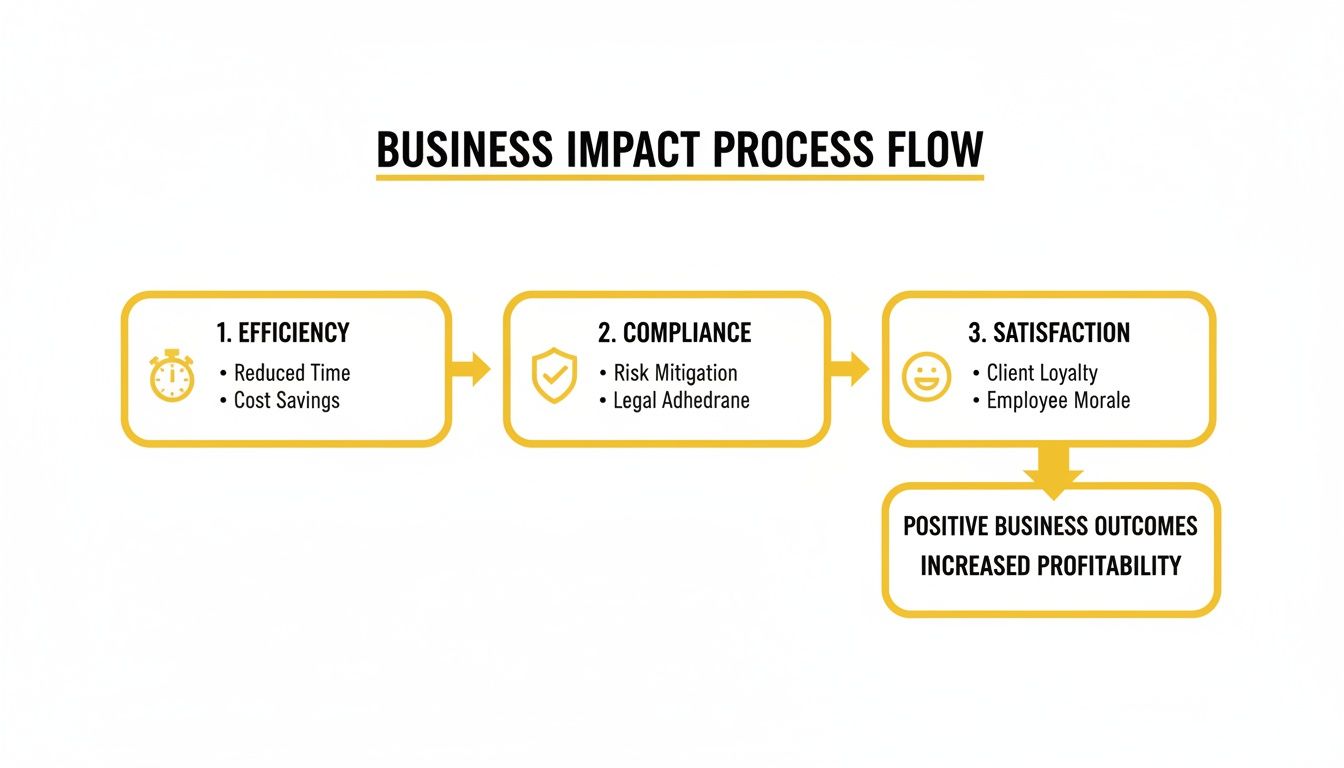
As you can see, the journey starts with efficiency gains, which then support better compliance and ultimately lead to happier residents.
Putting It All to the Test: Real-World Scenarios
It’s one thing to talk about features and benefits, but the real test is seeing how a smart communications platform handles the daily grind. Let's walk through a couple of classic strata management situations that will feel all too familiar, and see exactly how this kind of tech turns chaos into calm.
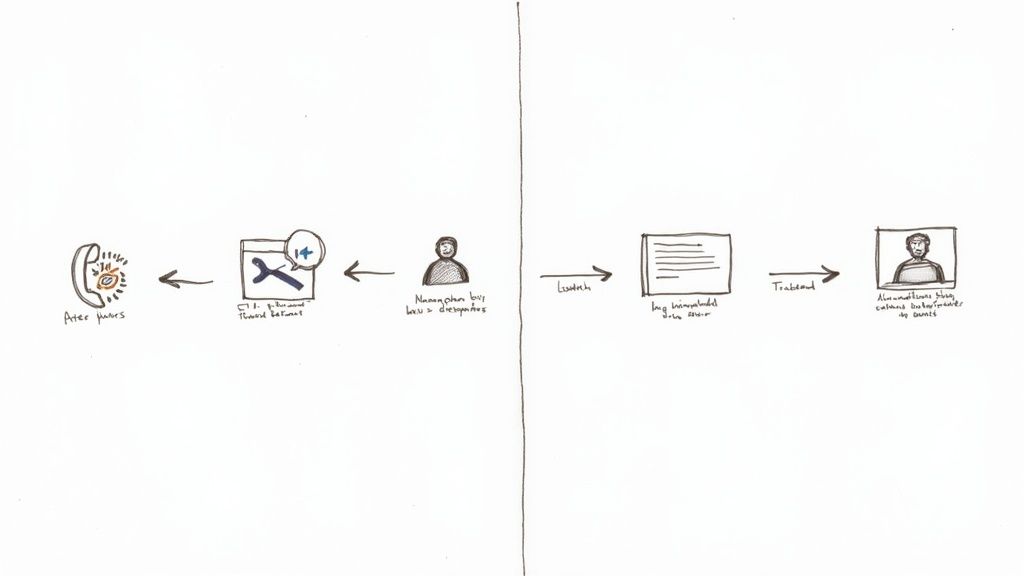
These examples aren't just about making life a little easier. They show a complete shift from putting out fires to having an automated system that prevents them from starting in the first place. It's the difference between walking into a disaster on Monday morning and seeing the solution was already underway before you even had your first coffee.
Scenario One: The After-Hours Emergency
Picture this: It's 2 AM on a Saturday. A pipe bursts in the basement car park of Building C, and water is gushing everywhere. A panicked resident calls the after-hours line, gets voicemail, and leaves a frantic message.
The Old Way (Without a Smart Platform):
That voicemail just sits there in a general inbox. No one even knows it exists until a manager clocks in on Monday morning. By then, the damage is done. The car park is flooded, cars are ruined, and the repair bill is ballooning into the tens of thousands. The agency is now staring down a huge insurance claim and an owner's corporation that is, justifiably, furious.
The Smart Way (With a Platform like OnSilent):
The moment that call ends, the platform kicks into gear with a pre-set, automated workflow.
- Instant Transcription: The AI immediately converts the panicked voicemail into clear text.
- Urgency Detection: It scans the message for keywords like "burst pipe," "flooding," and "urgent," instantly flagging it as a high-priority emergency.
- Automated Dispatch: Following the rules set up for Building C, the system automatically generates a work order and shoots it straight to the on-call plumber via SMS and email. The plumber gets all the details: the resident's contact info, the address, and a summary of the problem.
- Complete Audit Trail: Every single step—the initial call, the transcription, the contractor dispatch—is logged and time-stamped against the property's record in your system.
Within minutes of that first call, the plumber is on their way to fix the leak. When the manager logs in later, they see the entire sequence of events, with the problem already well on its way to being solved.
This isn't just about being fast. It's about having a rock-solid process that works flawlessly every single time, protecting the building, the residents' property, and your agency's reputation. It turns a potential catastrophe into a managed incident.
Scenario Two: The Non-Urgent By-Law Complaint
Now for something less dramatic but just as common. A resident sends an email on a Tuesday afternoon. Their neighbour in Lot 24 is hogging a visitor parking spot again, a clear breach of the by-laws.
The Old Way (Without a Smart Platform):
The email lands in a shared inbox already overflowing with maintenance requests and other queries. It might get seen that day, or it might get buried. The resident hears nothing back. They get frustrated, start sending follow-up emails, and make calls, feeling completely ignored. What started as a minor complaint has now escalated.
The Smart Way (With a Platform):
The system handles the initial contact with pure, professional efficiency.
- Automated Logging: The platform receives the email, recognises it as a non-urgent by-law issue, and automatically creates a new task linked directly to Lot 24.
- Instant Acknowledgement: A customised reply is sent straight back to the resident. It confirms their message has been received and logged, and assures them their strata manager will review it.
- Task Assignment: The task is then automatically assigned to the right portfolio manager, popping up in their workflow with all the necessary details attached.
This simple automated process de-escalates the situation from the get-go. The resident feels heard and knows their issue is in the queue. The manager gets an organised, trackable task, which means no more manual sorting and zero chance of things falling through the cracks.
Answering Your Key Questions
Alright, so you're thinking about bringing a smart communications platform into your strata management toolkit. It's only natural to have a few questions pop up. Let's tackle the big ones head-on, so you can see exactly how this kind of system fits into your business.
How Does This Platform Connect with Existing Software?
This is probably the most common worry we hear: "Is this just another piece of software that doesn't talk to our main system?" It's a fair question. The last thing you want is another data silo or more double-handling for your team.
The good news is, modern platforms are built specifically to avoid this. They connect directly with your core strata software, like MRI Strata Master or PropertyIQ, using something called an API (Application Programming Interface).
Think of an API as a secure translator between your two systems. It lets the communications platform pull property and resident details from your management software automatically. When a new call or message comes in, it pushes the communication log straight back into the resident's file. This constant sync means everything stays up-to-date in one place—no more manual data entry.
Will My Team Struggle to Learn a New System?
We get it. Rolling out new tech can sometimes feel like pulling teeth. But a well-designed platform is built with one goal in mind: making your team's life easier, not harder. The best systems are designed to feel intuitive and slot right into your existing workflows, which makes the learning curve surprisingly short.
The point isn't to add another complicated tool to the pile. It's about simplifying and bringing all your communications into one place. A user-friendly design, backed by solid training and ongoing support from the provider, means your team can get up and running from day one with minimal fuss.
What Is the Real Return on Investment?
Beyond the monthly fee, the real value comes from the time you get back, the risks you avoid, and the relationships you strengthen. Think about it: automating hours of phone tag and admin work every single week frees up your managers to focus on what really matters—growing the business and keeping clients happy.
Plus, the automatic audit trail is a massive compliance win. It gives you a rock-solid record in case of disputes, which can save you from costly headaches down the track. At the end of the day, faster, more transparent communication leads to happier residents and committee members. And in this business, that's the key to long-term client retention.
Ready to see what streamlined strata communications can do for your agency? OnSilent is an intelligent, automated solution built specifically for the chaos of modern strata management. Discover how it works and start your free trial today.