


Let's ditch the old-school image of someone hammering the phone with cold calls. That's not what we're talking about here. In today's world, the outbound calling meaning is much simpler and smarter: it’s any call your business makes to a customer or potential client.
Think of it like a friendly shopkeeper stepping out onto the footpath to greet someone looking in the window, instead of just waiting for them to wander inside.
So, What Is Outbound Calling Really?
At its heart, outbound calling is all about being proactive. Instead of sitting back and waiting for the phone to ring, your business is the one making the first move. This simple switch flips the whole dynamic from reactive to engaging, opening up doors and creating opportunities that you might have otherwise missed.
This is the complete opposite of inbound calling, where the customer is the one ringing you. Getting your head around the key differences between inbound vs outbound calls is a must for building a solid communication plan. While inbound is fantastic for customer support, outbound is your engine for growth—it lets you actively chase your goals.
An outbound call today isn’t about a pushy sales pitch. It's about a purposeful conversation. It’s a strategic touchpoint designed to build a relationship, offer real value, and help a customer take the next step.
For many Australian small and medium-sized enterprises (SMEs), this proactive approach isn't just nice to have; it's essential. It’s how you can:
- Dig up new leads: Actively get in touch with potential clients who've shown a bit of interest.
- Nurture your existing relationships: Follow up with past clients to offer new services or just to stay top-of-mind.
- Provide proactive service: Let customers know about important updates or check in after you've completed a job.
This is especially true for professionals in real estate, the trades, and other service-based industries. The ability to pick up the phone and initiate contact is non-negotiable. A well-timed, thoughtful outbound call can be the very thing that secures a new property listing, books a major project, or stops a valuable lead from going to your competitor. It’s all about building momentum through a direct, personal connection.
From Cold Calls to Customer Care
Outbound calling has come a long way, especially here in Australia. If you hear the term and immediately picture a stranger calling during dinner with a pushy sales pitch, it's time for a rethink. That old-school approach is well and truly dead.
Thanks to higher customer expectations and regulations like the Do Not Call Register, businesses have been forced to get smarter. Trust and relevance are the name of the game now. The goal isn't to interrupt someone's day but to start a helpful conversation that actually provides value.
Essentially, outbound calling has evolved from aggressive selling to proactive customer service. It's about reaching out, not pushing in.
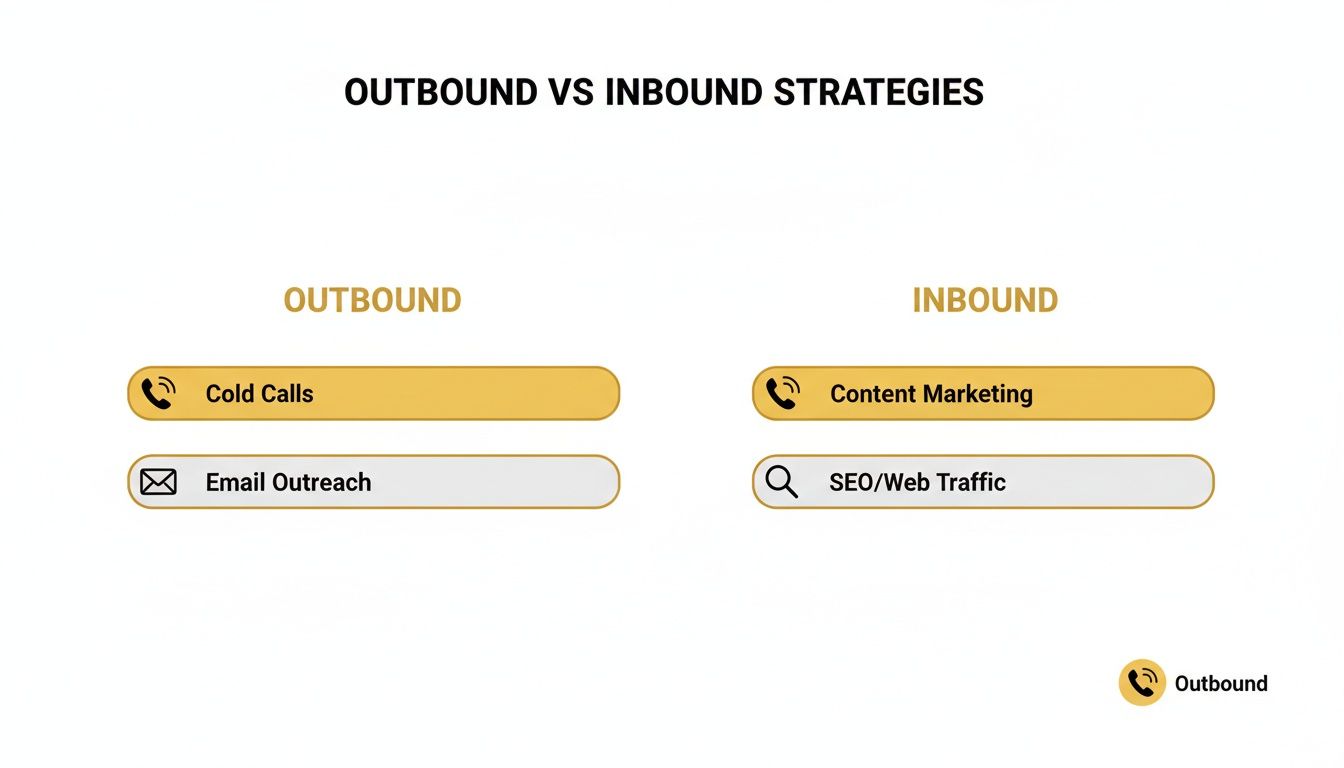
This image nails the difference: outbound is the business starting the chat, while inbound is the customer kicking things off.
From Nuisance to Nurturing
The numbers don't lie—this shift is massive. You might be surprised to learn that old-fashioned cold calling now makes up only around 4% of all outbound business calls in Australia.
So, what are businesses calling about? Let's break it down.
Modern Outbound Call Activity Breakdown in Australia
This table gives you a clear picture of what modern outbound calling actually looks like. It’s less about unsolicited sales and more about managing existing customer relationships.
| Type of Outbound Call | Percentage of Total Activity |
|---|---|
| Appointment Reminders & Updates | 35% |
| Customer Service Follow-ups | 28% |
| Order/Service Confirmations | 22% |
| Lead Nurturing & Warm Follow-ups | 11% |
| Traditional Cold Calling | 4% |
As you can see, the overwhelming majority of calls are service-related, focusing on building a relationship rather than just making a one-off sale. You can dive deeper into data on Australian call centre activity to see just how profound this trend is.
This is a huge opportunity, especially for service-driven SMEs. Your success no longer depends on casting a wide, impersonal net.
Instead, growth is fuelled by nurturing relationships and providing exceptional value. A proactive follow-up call, a helpful reminder, or a courtesy check-in builds lasting loyalty far more effectively than an old-school hard sell ever could.
This modern approach respects the customer's time and turns a potential interruption into a welcome, helpful interaction. For real estate agents, tradies, and other local professionals, getting this right is how you stand out and build a business that people genuinely trust and recommend.
How Businesses Use Outbound Calls to Grow
Knowing what outbound calling is, is one thing. Seeing it in action is a completely different story. Let’s get out of the textbook and into the real world to see how service-driven pros in Australia are using proactive calls to build their businesses, one conversation at a time. The secret isn't about being pushy; it's about making a timely, valuable connection.
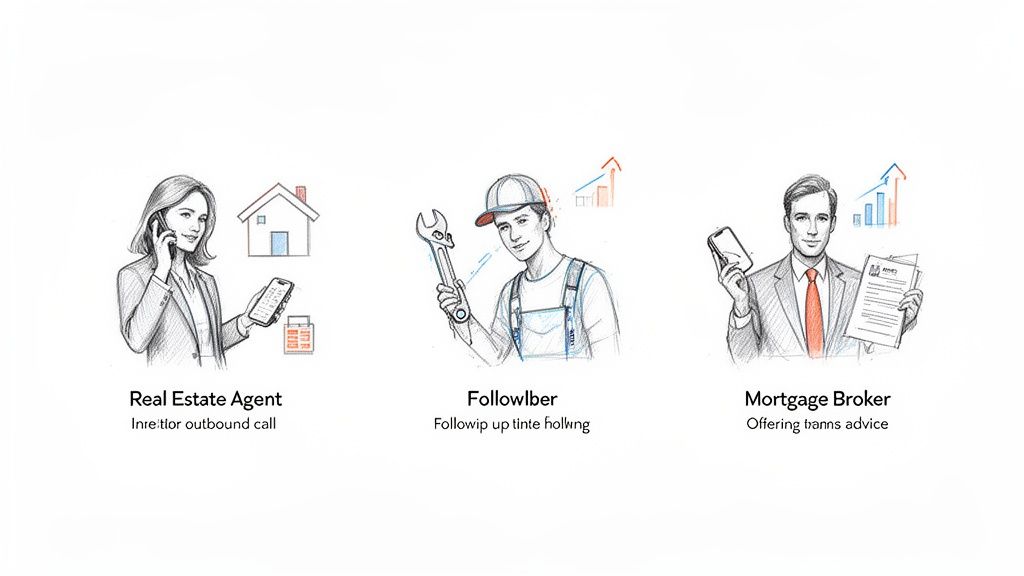
Take a real estate agent, for example. Instead of just waiting for the phone to ring, she calls a homeowner in her local area who downloaded a market report from her website last week. She isn't dialling for dollars or asking for the listing. Not at all. She's simply offering to clear up any confusing data, mentioning a recent sale on their street, and just building a bit of rapport. That one call instantly positions her as the go-to local expert.
From Quotes to Closed Deals
This exact same idea works a treat across all sorts of industries, especially for tradies and consultants. Picture a plumber who sent over a detailed quote for a bathroom reno three days ago. A quick follow-up call gives him the perfect opening to answer any questions, explain why he recommended certain materials, and show the client he’s on the ball and organised.
That simple gesture is often what seals the deal, stopping his quote from getting lost in a pile of others.
A well-timed outbound call transforms your business from a passive service provider into an active, trusted partner. It demonstrates initiative, builds confidence, and keeps you front-of-mind.
Nurturing Leads for Long-Term Success
Outbound calling is also an absolute powerhouse for nurturing those long-term leads. A mortgage broker, for instance, probably has a list of potential first-home buyers who aren't quite ready to pull the trigger.
- A quick check-in call: "G'day Sarah, just wanted to see how your savings are tracking toward your deposit goal."
- Offering new info: "A new government grant was just announced that you might be eligible for."
- Building the relationship: "I saw an interesting property list in the neighbourhood you liked and thought of you."
Each one of those calls is a small investment in a future client. It makes sure that when they are ready to make a move, he's the only person they even think of calling.
These scenarios get to the heart of what modern outbound calling is all about. For many businesses, the real challenge is just finding the time to consistently make these crucial calls. Figuring out how you can automate phone calls for routine follow-ups can free you up to focus on these high-value, relationship-building conversations that actually drive real growth.
Best Practices for Effective Outbound Outreach
A great outbound call never just happens. It’s a deliberate, strategic move. To make every chat count, you need a plan that’s all about delivering value and showing respect, turning a simple phone call into a proper connection. Winging it just wastes your time and, let's be honest, probably annoys potential clients.
First up, you’ve got to define your purpose. Before you even think about picking up the phone, get crystal clear on why you're calling and what you hope to get out of it. Are you chasing up a quote? Giving a local market update? Or maybe just checking in with a past client? A solid objective keeps the conversation on track and professional.
Next, timing is absolutely everything. Phoning a busy professional smack-bang in the middle of their peak hours is a surefire way to make a bad first impression. While research often points to late morning or mid-afternoon as the sweet spots for business calls, the real secret is knowing your specific audience and when they’re most likely to be receptive.
Guide the Conversation, Don’t Dictate It
Look, having a script is smart, but sticking to it like glue is a rookie mistake. The best way to go is using a flexible guide with key talking points, not a word-for-word monologue. This frees you up to actually listen and have a genuine, two-way conversation.
The goal of a modern outbound call isn't to deliver a speech. It's to kick off a dialogue that builds trust and uncovers what someone really needs, showing you're a partner, not just another salesperson.
This approach means you can adapt to their tone and responses, creating a real sense of rapport. It's this flexibility that makes the difference between a welcome call and an unwelcome interruption.
Compliance and Respect Are Non-Negotiable
Getting your head around outbound calling meaning today also means understanding your legal and ethical duties. Always, always respect the Do Not Call Register. Make sure you have a legitimate reason for contacting someone, like an existing business relationship or their prior consent.
Here are a few essential compliance checks to tick off every time:
- Identify Yourself: Kick off the call by clearly stating your name and the business you're representing.
- State Your Purpose: Be upfront about why you’re calling. A bit of transparency goes a long way in building instant trust.
- Provide Contact Information: Make it easy for the person to get in touch with you or your business after the call is over.
Following these practices doesn’t just make your outreach more effective; it makes it ethical. You’ll protect your reputation and build a foundation of trust with every single person you call.
How AI Is Shaking Up Outbound Calling
The next big evolution in outbound strategy is already here, and it's powered by artificial intelligence. For busy professionals, the biggest roadblock to making those crucial follow-up calls is simply a lack of time. This is where AI call assistants are completely changing the game, turning what was once a manual chore into a slick, automated process.
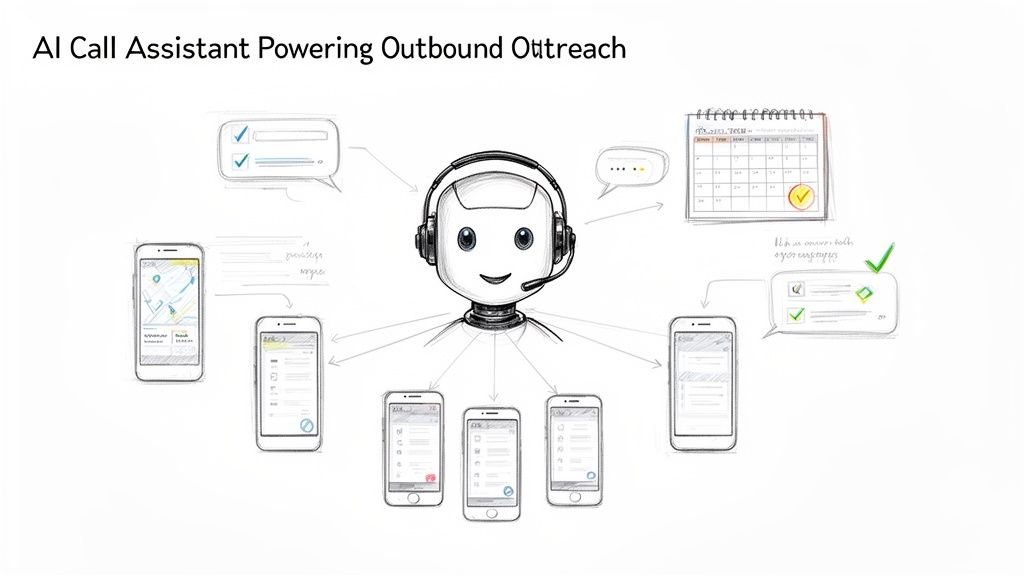
Imagine following up on hundreds of leads, scheduling appointments, and nurturing client relationships without ever picking up your phone. That’s the power of AI. It lets you scale your outreach efforts without having to scale your team, making sure no opportunity slips through the cracks just because you were swamped.
This technology is tapping into a serious need. The global outbound call centre market was valued at a huge $25.7 billion in 2023 and is tipped to hit $45.6 billion by 2032. A lot of that growth is thanks to AI making things more efficient, a trend Australian businesses are definitely keeping an eye on.
Smarter Conversations at Scale
An AI assistant doesn't just dial numbers; it has intelligent conversations. These systems can take over the routine tasks that chew up hours of your day, freeing you up to focus on the high-value chats that really need a human touch.
- Automated Lead Follow-Ups: An AI can instantly ring a new web enquiry to qualify them on the spot.
- Appointment Scheduling: It can check your calendar, find a suitable time, and lock in appointments directly.
- Nurturing Campaigns: The system can make periodic check-in calls to your long-term prospects so they don't go cold.
This level of automation used to be something only big corporations could afford, but tools like OnSilent now put it within reach for any SME. Checking out how AI phone calls are being used gives you a great picture of what’s possible for your business.
By handing off repetitive outreach to an AI, you empower your business to maintain consistent communication and build stronger relationships, all without the manual grind. It’s all about working smarter, not harder.
The practical application of an AI sales assistant is enormous. Think of it as a tireless team member that never gets sick or takes a day off. This shift allows even a one-person operation to deliver the kind of proactive service that builds lasting customer loyalty and drives serious growth.
Still Got Questions About Outbound Calling?
Even with a solid grasp of outbound calling, a few questions might still be floating around. Let's clear the air and tackle some of the most common ones so you can move forward with confidence.
What's the Real Difference Between Outbound and Inbound Calling?
The easiest way to think about it is this: who’s making the first move?
Inbound calling is reactive. A customer has a question or a problem, and they call you for help. They're coming to you.
On the other hand, outbound calling is proactive. Your business is the one picking up the phone to connect with a customer or a potential lead. You're going to them.
Think of it like a shop owner. Inbound is when a customer walks through your door. Outbound is when you step outside to greet someone passing by and invite them in. Both are vital, but they play completely different roles in how you communicate with your market.
Is Outbound Calling Actually Legal in Australia?
Absolutely. Outbound calling is completely legal in Australia, but you do need to play by the rules. Regulations like the Do Not Call Register Act and the Privacy Act are in place to make sure consumers aren't being hounded by unwanted sales calls.
But don't let that scare you. These rules are not there to stop you from building genuine relationships.
Calling a past client to let them know about a new service, following up on an enquiry they made, or giving them an important update isn't just allowed—it's good business. The golden rule is simple: make sure your call is valuable and always respects their privacy.
How Can a Small Business Get Started with Outbound Calling?
Jumping into outbound calling doesn't have to be a massive, complicated project. The smartest place to start is with the people who already know you: your warm leads and past customers.
Here’s a simple three-step plan to get the ball rolling:
- Start with a focused list: Don't try to call everyone at once. Pick a small, manageable group of contacts to begin with.
- Have a clear goal: Know why you're calling. Maybe it's a quick check-in, a heads-up about a market shift, or a special offer. Make it helpful.
- Track what happens: Use a basic spreadsheet or a simple CRM to keep notes on your calls and their outcomes.
This approach keeps things from getting overwhelming. As you get busier, the real challenge becomes consistency—finding the time to keep making those calls. That’s exactly where an AI call assistant can be a total game-changer, handling the routine follow-ups so you can focus on the conversations that really matter.
Ready to get your time back and stop leads from slipping through the cracks? OnSilent gives you an AI Personal Assistant that answers your calls, qualifies leads, and keeps relationships warm, all on autopilot. Find out how much time you could be saving with a free 2-week trial.