

Right, let's break down what an "outbound call" actually is. Put simply, it’s any phone call your business makes out to a customer or potential client.
This is the polar opposite of an inbound call, where you're waiting for the phone to ring. With outbound calling, you're in the driver's seat, proactively reaching out to create your own opportunities.
What an Outbound Call Means in Today's Business
If the term "outbound call" makes you think of aggressive cold calling and random dialling, it's time for a refresh. That old-school approach is dead. Today, it’s all about strategic, purposeful communication.
It's no longer just a sales tool. It's a fundamental part of nurturing leads, setting appointments, and building solid client relationships across countless Aussie industries.
Think of it this way: the old method was like randomly knocking on doors, hoping someone might be interested in what you're selling. A modern, strategic outbound call is more like a scheduled visit. You have a clear purpose, and you've tailored your approach to the person you're speaking with.
This proactive mindset is a massive part of how local businesses operate. In fact, the outbound telemarketing scene in Australia is tipped to become a $143.83 million market by 2025. It’s clear that a huge number of businesses are leaning on structured campaigns to grow. You can discover more insights about outbound market trends to see just how much this space has evolved.
This shift really boils down to a couple of key changes:
- It's Purpose-Driven: Every single call has a goal. Maybe you're following up on a quote you sent out, confirming an inspection time with a potential home buyer, or chasing up some missing documents for a loan application.
- It's Relationship-Focused: The real aim isn't just to push a product or service. It's to build genuine rapport and actually provide some value to the person on the other end of the line.
These days, tech like AI assistants is completely changing the game. Now, even a sole trader can manage their outreach with the same power and precision as a massive team, making smart, strategic outbound calling more achievable than ever before.
Outbound vs Inbound Calls: A Clear Comparison
To really get what an outbound call is, it helps to look at what it’s not. The simplest way to break it down is to ask: who kicked off the conversation?
An outbound call is proactive. It’s you, your business, reaching out to make something happen—whether that’s generating a new lead, chasing up a promising enquiry, or just touching base with a client. Think of it as stepping out into the market to actively create business instead of waiting for it to find you.
On the flip side, an inbound call is reactive. This is when a customer or potential client picks up the phone and calls you. They’re coming to you with a question, a problem, or a need they already have. It’s like a customer walking into your shop because they know they need something you offer.
The whole game has changed over the years. Outbound calling isn't about mindlessly dialling random numbers anymore; it's become a much more focused and strategic activity.
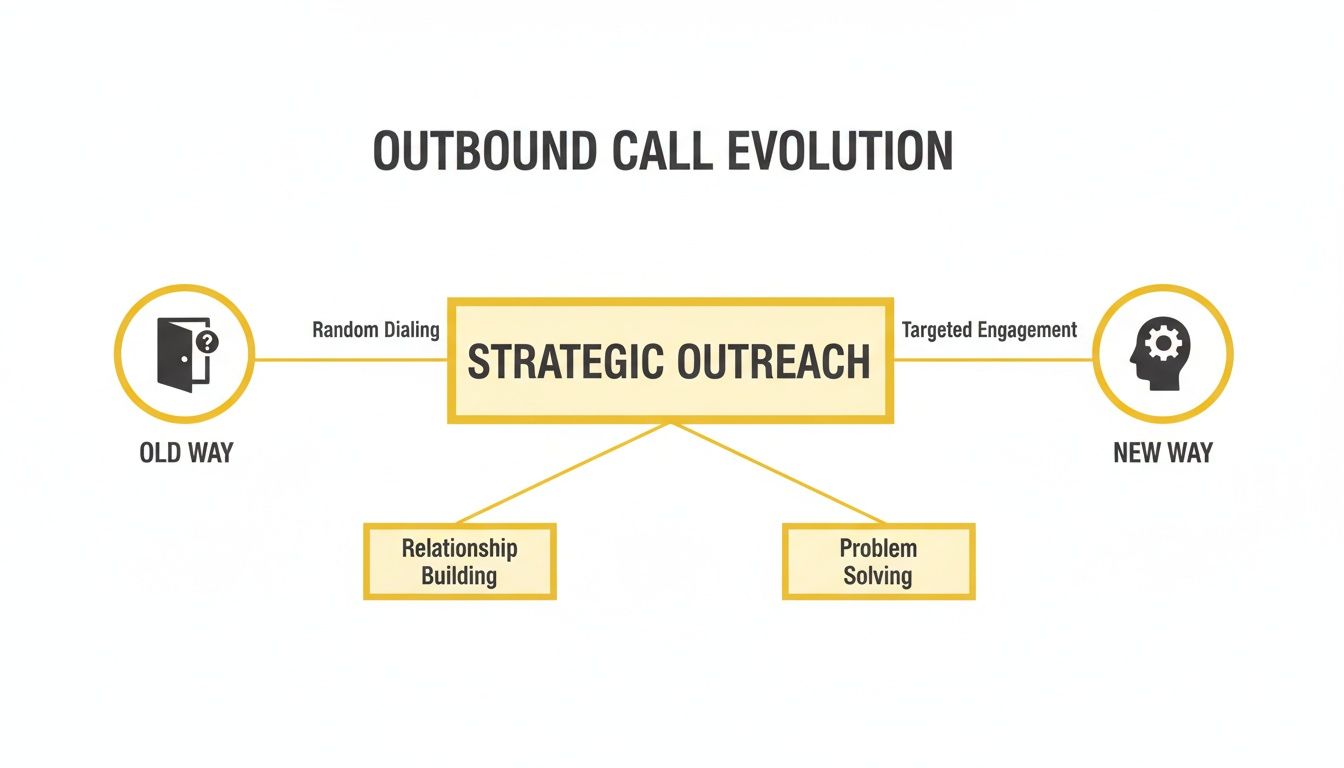
The big takeaway here is that modern outbound calls are all about deliberately building relationships, not just firing off one-off sales pitches into the void.
To make this crystal clear, let's put them side-by-side.
Outbound vs Inbound Calls At a Glance
| Attribute | Outbound Calls | Inbound Calls |
|---|---|---|
| Who Initiates? | Your business reaches out. | The customer or prospect calls you. |
| Purpose | To generate leads, make sales, conduct surveys, or follow up. | To answer questions, provide support, or take orders. |
| Approach | Proactive – you're creating the opportunity. | Reactive – you're responding to a need. |
| Example | Calling a list of potential clients to introduce your service. | Answering a call from someone who saw your ad. |
This table neatly summarises the fundamental difference: one is about hunting, and the other is about farming. Both are crucial for a thriving business.
Proactive vs Reactive Communication
At its core, the difference comes down to intent and timing. Outbound calls are about getting on the front foot, driving the conversation, and creating your own momentum. Inbound calls are about capably handling the demand that already exists.
An outbound strategy puts you in the driver's seat of your sales pipeline. It lets you generate leads on your own terms rather than just waiting for the phone to ring.
A healthy business needs both. A business that only ever makes outbound calls is likely dropping the ball on customer service. On the other hand, a business that only ever waits for inbound calls is leaving its growth completely up to chance.
Finding the right balance is the key to a powerful communication strategy. If you want to dive deeper into how these two approaches can work together, you can find a full breakdown on inbound vs outbound calls.
How Australian Professionals Use Outbound Calls
Knowing what an outbound call is in theory is one thing, but seeing it in action is where the magic really happens. Across Australia, savvy professionals have ditched the old-school, scattergun cold calling approach. Instead, they're using targeted outbound calls to solve everyday problems and genuinely grow their business.
For them, making a call isn't just about dialling a number; it's a proactive, purposeful move. It’s a core part of their B2B Lead Generation Strategies. Rather than sitting back and waiting for the phone to ring, they pick it up with a clear goal—whether that’s chasing a detail, nurturing a relationship, or closing a deal.

Real Estate Agents Building Pipelines
For any real estate agent, outbound calls are the absolute lifeblood of their business. Think about it: after a busy open home, the work has only just begun. They aren't just sitting by the phone hoping for offers. Top agents are straight on the blower, calling every person who walked through the door to get feedback, see who's keen, and suss out potential buyers or even future sellers.
This follow-up is what builds a solid, long-term pipeline. A single, well-timed call can turn someone who was just browsing into a red-hot lead. Of course, having the right approach makes all the difference. Many agents use structured guides to keep the conversation on track—you can check out some great examples in these real estate cold calling scripts.
Brokers and Tradies Driving Efficiency
It's a very similar story for mortgage brokers and tradies, where getting things done efficiently is the name of the game. A broker's day is packed with outbound calls that are essential for keeping deals from falling over.
- Chasing up documents from clients to get loan applications across the line.
- Confirming appointments with banks and valuers to sidestep any delays.
- Following up with leads who showed initial interest but haven't committed.
For tradies, proactive calling has a direct impact on cash flow and keeps the jobs rolling in. They’re constantly making outbound calls to provide quotes, follow up on unpaid invoices, and schedule work with clients. In these busy, hands-on roles, a quick phone call is often the fastest way to get an answer and keep the business running like a well-oiled machine.
The Real-World Payoffs of a Smart Outbound Strategy
So, we know what an outbound call is. But let's get to the important bit: why should you bother? A proper outbound strategy is like adding a turbocharger to your business. It flips the switch from reactive to proactive, meaning you stop waiting for leads to fall into your lap and start making your own luck.
Think about it. This approach puts you firmly in the driver's seat of your sales pipeline. It’s the difference between a tradie hoping the phone rings and one who actively calls past clients to see how things are going, often digging up new jobs just by checking in.
Speed Up Your Sales Cycle
A well-timed outbound call can be the shortcut to closing a deal. When you get a prospect on the phone, you can answer their questions and squash any concerns on the spot, keeping the momentum rolling. This is gold for mortgage brokers chasing documents or real estate agents trying to lock in an offer.
Let's be honest, a quick, personal follow-up call is a world away from a passive email that could sit unopened for days. That direct chat builds trust and nudges people towards a decision much, much faster.
The real magic of a great outbound strategy is taking back control. You're not just a player in the market; you're actively shaping your own results by starting valuable conversations.
Generate Better Quality Leads
While dropping a wide net with marketing has its place, outbound calls are all about precision. You can laser-focus your energy on specific postcodes, types of clients, or even past customers who you know are likely to need you again. This surgical approach almost always leads to better conversations and, ultimately, better leads.
A classic example is a property manager calling landlords in a specific apartment building to offer their services. The payoffs from this kind of targeted work are crystal clear:
- Proactive Lead Generation: You’re creating brand-new business instead of just fielding whatever comes in.
- Stronger Relationships: A personal follow-up call builds loyalty and gets you repeat business.
- Faster Closures: You can tackle objections head-on and shorten the whole sales process.
Measuring Success with Key Outbound Call KPIs
Making a bunch of calls without tracking what happens is like driving with your eyes closed – you're moving, but you have no idea if you're getting anywhere. If you want to know if your outbound strategy is actually working, you need to look at a few Key Performance Indicators (KPIs).
Don’t worry, this isn’t about getting bogged down in complicated spreadsheets. It’s about a few simple numbers that tell you what’s working and what needs a tweak.
The first and most basic KPI to watch is your Call Connection Rate. It's a simple one: what percentage of your calls actually get answered by a real person? If this number is super low, it’s a red flag. It could mean your contact list is stale, or maybe you’re just calling at the worst possible times.
Turning Conversations into Outcomes
Getting someone to pick up is just the first step. The real magic is what happens next, and that’s where your Conversion Rate comes in. This is the metric that tracks how many of your chats lead to the result you were hoping for. It’s the ultimate test of whether your calls are actually achieving anything.
A "conversion" doesn't just mean closing a sale on the spot. It's any step that moves things forward – like booking a property viewing, scheduling a time to quote a job, or getting a "yes" for a follow-up meeting.
By keeping an eye on these KPIs, you stop making calls for the sake of it and start making smart calls. You’ll quickly be able to:
- Figure out which scripts and opening lines actually get a good response.
- Spot problems in your process, like a connection rate that’s dragging you down.
- Tweak your strategy based on real data, not just a gut feeling.
Understanding these numbers gives you the power to fine-tune your approach, making sure every minute you spend on the phone is time well spent.
How AI Is Modernising Australian Outbound Calling
The days of grinding through long lists and manually dialling numbers are well and truly numbered. Technology, especially Artificial Intelligence, is completely changing the game for what an outbound call means for Aussie businesses.
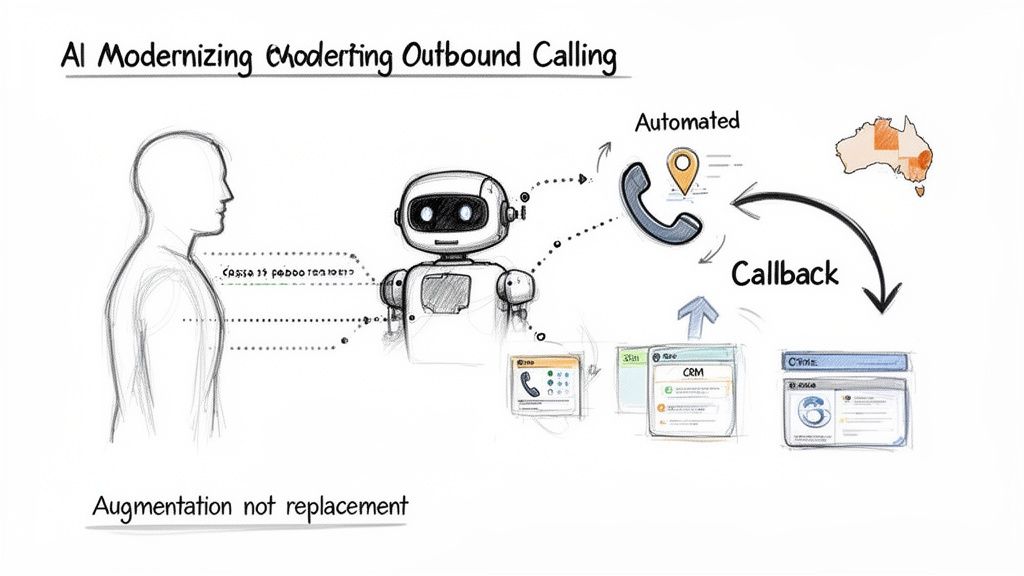
Instead of replacing the human touch, AI actually enhances it. It takes over the repetitive, soul-crushing tasks that bog down busy professionals. Just imagine having an assistant that can handle massive outreach campaigns, instantly call back every single missed call so you never lose a lead, and sync with your CRM to send out perfectly timed follow-ups.
Freeing Up Professionals for High-Value Work
This kind of automation frees up Aussie tradies, real estate agents, and brokers to get back to what they do best: having quality conversations that build relationships and actually close deals. The tech handles all the grunt work, making sure your communication is consistent and timely without you having to lift a finger.
The big idea is pretty simple: let the machines handle the boring stuff so you can focus on genuine, money-making conversations. Making this shift is absolutely crucial if you want to stay competitive.
Modern tools like AI voice agents are built to be the engine behind this new wave of efficiency, taking over tedious follow-ups and initial outreach calls. If you're keen to dig deeper into how this works, checking out some info on AI-powered lead generation strategies is a great next step.
By getting on board with these tools, even a one-person operation can run an outbound strategy with the power and precision of a massive call centre.
Your Outbound Call Questions Answered
Even with a solid game plan, you might have a few lingering questions about making outbound calls work for you. Let's tackle some of the most common ones we hear.
Are Outbound Calls Still Effective?
You bet they are. While the days of random, untargeted cold-calling are pretty much over, strategic outbound calls are more powerful than ever. Think lead nurturing, setting up appointments, and customer follow-ups.
The modern outbound call is all about adding value and having a clear purpose. It's a vital tool for building genuine business relationships, not just dialling for dollars.
What Are the Legal Rules for Outbound Calls in Australia?
In Australia, the big one is the Do Not Call Register Act. This stops you from making unsolicited telemarketing calls to numbers on the register. There are also rules around when you can call and how you identify yourself.
But here’s the thing: most of the calls you’ll be making—like following up on a quote or a direct enquiry—aren't considered "unsolicited" and are perfectly fine. Just make sure your contact lists are clean and compliant.
It all comes down to consent and relevance. A call to follow up on a recent open home inspection is a welcome interaction, not an unsolicited nuisance. Getting this distinction right is the key to modern, effective outbound communication.
How Can I Start Without a Dedicated Sales Team?
You don’t need a massive team to get started. Seriously. You could begin by simply blocking out 30 minutes each day to follow up on recent enquiries.
The most efficient way to get going, though, is to use a bit of tech. An AI call assistant can handle things like calling back missed calls or even running small outreach campaigns for you. It gives you all the power of a call centre, without the massive overhead.
Ready to reclaim your time and never miss another lead? See how OnSilent can automate your outbound calls and transform your follow-up strategy. Explore the possibilities at https://onsilent.com.