

A CRM built for the construction industry is a purpose-built bit of software designed to wrangle the unique chaos of our world—the long project lifecycles, the web of stakeholder relationships, and the complex sales process that builders and tradies live and breathe. Unlike a generic CRM that’s all about simple sales funnels, a construction-specific platform is engineered from the ground up to handle bids, tenders, project tracking, and subcontractor coordination from one central spot.
Why Generic CRM Software Fails in Construction
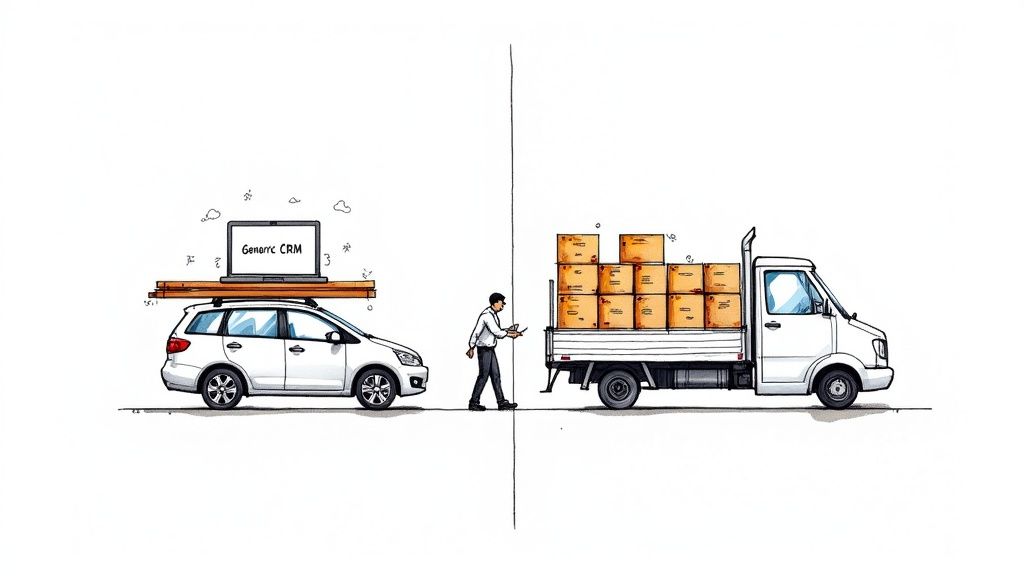
Let's be honest, the construction game doesn't run like your average sales office. It's a complicated ecosystem of bids, tenders, subcontractors, and long-term project relationships. Using a generic CRM is like trying to haul steel beams in a family sedan—it might move a small piece, but it’s clumsy, inefficient, and just not built for the job.
Standard software is designed for quick, transactional sales, not the project-based, relationship-heavy nature of construction. This mismatch creates some serious headaches for builders and contractors who try to force a square peg into a round hole.
The Disconnect Between Standard Software and Construction Needs
The core problem is that generic tools just don't get our workflow. A standard system tracks a lead, a sale, and maybe a follow-up email. A construction project, on the other hand, involves dozens of stages, stakeholders, and documents that stretch out over months, sometimes even years.
Here’s where generic tools really drop the ball:
- Project-Centric Views: Standard CRMs are all about the contact. But in our world, everything revolves around the project. We need a system that links every single contact, document, and conversation back to a specific job site or tender.
- Bid and Tender Management: The bidding process is the lifeblood of any construction business. Generic CRMs have zero dedicated features for tracking bid submissions, deadlines, and subcontractor quotes, which is a surefire way to let opportunities slip through the cracks.
- Complex Stakeholder Webs: A single project involves the client, architects, engineers, suppliers, and a whole crew of subcontractors. A generic CRM just can't map these intricate relationships without turning into a tangled mess.
A purpose-built CRM for the construction industry isn't just a database; it's a strategic command centre. It’s designed to manage the entire client and project lifecycle—from the initial bid to the final handover and beyond—turning chaos into organised, profitable work.
You can see the growing need for these specialised tools in the market's expansion. Australia's construction and design software market is booming, and bid management is the fastest-growing part of it. This tells you just how critical it is to track leads and nurture client relationships in such a competitive space.
This guide will give you a clear roadmap to understanding, choosing, and actually implementing a system that’s built for your world. We'll dive into the must-have features, business benefits, and practical steps to make sure you invest in a tool that solves problems instead of creating new ones. If you're just starting out, getting your head around the basics of customer management software for small business can be a great first step.
Must-Have Features of a Construction CRM
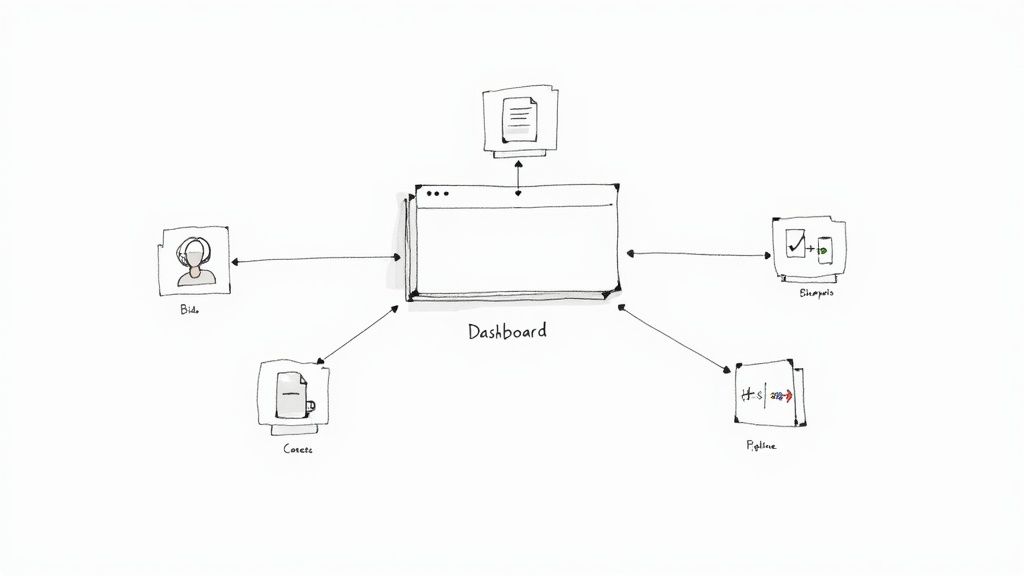
So, what actually makes a CRM for the construction industry different from a standard sales tool? It’s not just a different label on the box; the entire engine is built for a completely different purpose. While a generic CRM is great at tracking individual leads, a construction CRM is designed to track entire projects, linking every single email, phone call, quote, and document back to a specific job.
This project-centric approach is the absolute foundation. Think of it like a job site foreman versus an office manager. Both organise people and tasks, sure, but the foreman gets the flow of work from digging the foundation to the final handover. They know how every tradie and supplier connects to a specific phase of the build. Your CRM needs to do the exact same thing for your data.
Project-Centric Contact Management
In construction, your list of contacts is a complex web. For a single project, you've got the client, the architect, multiple subcontractors, and a dozen different suppliers all involved. A generic CRM just can't handle this, treating everyone as a separate, disconnected contact.
A purpose-built system, on the other hand, understands these relationships. It lets you link every stakeholder directly to a project file. This means when you pull up the "Henderson Street Project," you instantly see the client's details, the plumber's mobile number, the engineer's latest report, and the sparkie's last email—all in one organised spot. No more digging through your inbox.
Bid and Tender Tracking
The bidding process is where jobs are won or lost, plain and simple. Trying to keep up with detailed tenders, deadlines, and subcontractor quotes using a spreadsheet or a generic sales pipeline is a recipe for disaster.
A specialised CRM for construction gives you a dedicated space for this. It helps you:
- Monitor Deadlines: Keep an eye on submission dates for multiple tenders at once, so a high-value opportunity never slips through the cracks.
- Centralise Quotes: Store and compare quotes from different subcontractors right inside the project file, making it much easier to build accurate and competitive bids.
- Analyse Win/Loss Ratios: See which types of jobs you're actually winning, helping you tweak your bidding strategy and focus on your most profitable work.
This isn't just about being organised; it’s about gaining a serious competitive advantage. When you streamline your bidding process, you can respond to more tenders with greater accuracy, which directly boosts your chances of winning new business. A good system turns a chaotic paper trail into a strategic, money-making machine.
Document Control and Management
Construction runs on paperwork. We’re talking blueprints, contracts, permits, variation orders, and safety compliance forms. It all adds up to a mountain of documents for every single job. Keeping this stuff organised and accessible isn't just about efficiency—it's crucial for legal protection too.
A construction CRM acts like a central digital filing cabinet for each project. You can upload, store, and share project-specific documents with the right people. For example, you can give your team on-site access to the latest architectural drawings through a mobile app, making sure they're always working from the current version and reducing the risk of expensive mistakes. This digital trail also gives you a clear record of who accessed what and when.
This level of automation is a genuine game-changer. Instead of manually chasing paperwork, the system does the heavy lifting for you. You can learn more about how this works in our guide on what is workflow automation, which breaks down how systems can handle repetitive tasks to free up your team.
Mobile Accessibility and On-Site Integration
Let's face it, construction work doesn't happen behind a desk. Your project managers, site supervisors, and even your sales team are constantly on the move. A CRM that’s chained to an office computer is pretty much useless in this industry.
That’s why solid mobile access is a non-negotiable. A good mobile app lets your team:
- Access Client Information: Pull up a client’s phone number or project history right from their ute before a site meeting.
- Update Project Notes: Snap photos, log progress updates, or record client chats in real-time from the job site.
- Manage Tasks On the Go: Assign a job to a subbie or update a project timeline without having to head back to the office.
This seamless connection between the field and the office ensures everyone is on the same page, cutting down on miscommunication and keeping your projects moving forward smoothly.
How a CRM Really Drives Business Growth
Bringing in the right software is about way more than just organising your contacts; it’s a total shift in how you run your business. A purpose-built CRM for the construction industry isn't just another tool—it's the engine for real, measurable growth, connecting what you do every day directly to your bottom line.
Think of it this way: all that scattered information from tenders, client chats, and site updates gets turned into a strategic asset. Instead of relying on memory, scribbled notes, and messy spreadsheets, a CRM gives you the framework to systematically win more jobs and keep your clients coming back. It’s the difference between just reacting to whatever comes your way and actively creating your own opportunities.
The ripple effect is felt everywhere, from the team in the office to the crew on-site. It’s a tool that pays for itself not just in time saved, but in contracts won and relationships built to last.
Winning More Bids with Smarter Lead Management
Your sales pipeline is the lifeblood of your company. A construction CRM acts as its central nervous system, making sure no lead ever slips through the cracks. By tracking every potential job from the first phone call to the final decision, you get a bird's-eye view of all your opportunities.
This clarity lets you focus your energy on the high-value tenders and follow up with perfect timing. You can set up automated reminders to nudge your team to check in on a promising lead, and a central dashboard shows you exactly where every bid is at. This methodical approach is a surefire way to improve your bid-to-win ratio.
Imagine a mid-sized building company that boosts its win rate by 15% in the first year. They didn't do it by working longer hours. They did it by working smarter—using their CRM to pinpoint their most profitable project types and channelling their bidding efforts where they had the best shot at success.
This kind of insight takes you beyond guesswork. It lets you make data-driven decisions that fuel steady growth. You can even look back at past bids to figure out why you won or lost, helping you sharpen your strategy for next time.
Building Client Loyalty and Raking in Referrals
In the trades, a happy client is your best form of marketing. Solid relationships lead to repeat business and those golden word-of-mouth referrals. A CRM is your secret weapon for building that loyalty by keeping communication clear and consistent all the way through a project.
Every conversation, email, and decision gets logged right there in the client's project file. This means anyone on your team can jump in on a conversation and be completely up to speed, making the client feel genuinely heard and looked after. It gets rid of that all-too-common frustration of a client having to explain themselves over and over again to different people.
It’s this intense focus on the customer experience that’s driving huge investment in the Australian market.
- The CRM scene in Australia was valued at USD 1.97 billion in 2024 and is tipped to hit USD 5.01 billion by 2033.
- This explosion is fuelled by the need for better client management in industries like construction, where projects and relationships are long-term.
- Firms that use a CRM to nail their communication can see client retention jump by up to 25%—a massive win for any business. You can discover more insights into the Australian CRM market and its growth trajectory.
Connecting the Office to the Crew On-Site
One of the biggest headaches in construction is the gap between the admin team and the crew on the ground. A CRM with a solid mobile app closes that gap, creating a single source of truth that everyone can tap into, wherever they are.
When your site supervisor can pull up client details, project specs, or the latest variation order on their tablet, mistakes are avoided and things just run smoother. Back in the office, a project manager can see real-time progress updates from the field, which means better planning and the ability to solve problems before they blow up. This connection slashes admin errors and gets your whole operation running like a well-oiled machine.
Choosing and Implementing Your Construction CRM
Ready to make a move? Picking and rolling out a new CRM doesn't have to be a massive headache. Think of this as a practical, step-by-step playbook for getting the right system in place without throwing your business into chaos. It’s as much about your people and processes as it is about the tech itself.
A successful rollout really just boils down to having a clear plan. By breaking it down into manageable chunks—figuring out your needs, checking out vendors, planning integrations, and getting your team on board—you can make a confident decision and ensure your crew actually uses the new tool from day one. This approach minimises friction and gets you a return on your investment much faster.
Define Your Real Business Needs
Before you even think about watching a single demo, you need to map out what you actually need the CRM to do. Don't start with a list of flashy features; start with your biggest pain points.
Are you losing track of tenders? Is communication between the site and the office a constant battle? Are you struggling to see which clients are your most profitable?
Create a simple checklist of your core requirements. This will be your guiding star for the entire process.
- Lead and Bid Management: How many bids do you juggle at once? Do you need to track subcontractor quotes inside the system?
- Project Communication: Do you need one central spot to log all client emails, calls, and site notes for a specific job?
- Mobile Access: Is it absolutely critical for your site supervisors to access and update project info from their phones or tablets?
- Reporting: What key numbers do you need to see at a glance? Think bid-win ratios, project profitability, or the total value of your sales pipeline.
This first step is all about getting clarity. Once you know exactly what problems you’re trying to solve, you can cut through the marketing noise and focus on software that delivers real solutions for your construction business.
Research Vendors and Ask the Right Questions
With your needs clearly defined, it’s time to start looking at potential vendors. Don't just settle for the first option that pops up in a search. Shortlist three to five providers that specialise in the crm for construction industry and line up demos with each of them.
When you get into these demos, come prepared with specific, targeted questions that tie directly back to your checklist of needs. Generic questions get generic answers.
A demo isn't a passive presentation; it's an interrogation. Your goal is to see how the software would handle your real-world scenarios, not just watch a salesperson click through a perfect, pre-packaged tour. Challenge them with your messiest, most complicated workflows.
Here are some sharp questions to get you started:
- "Can you show me exactly how your system tracks a tender from the initial enquiry all the way to a won or lost contract?"
- "How does your mobile app work offline? What happens if a supervisor is on a site with no reception?"
- "Walk me through the process of linking a new subcontractor quote to an existing project file."
- "What does the standard reporting dashboard look like for a business like ours, and how much can we customise it?"
This approach turns you from a passive viewer into an active evaluator, making sure you choose a system that fits your operations like a glove, not the other way around.
The journey from managing bids to building loyalty and driving profit is a clear process that the right CRM can help you visualise and manage.
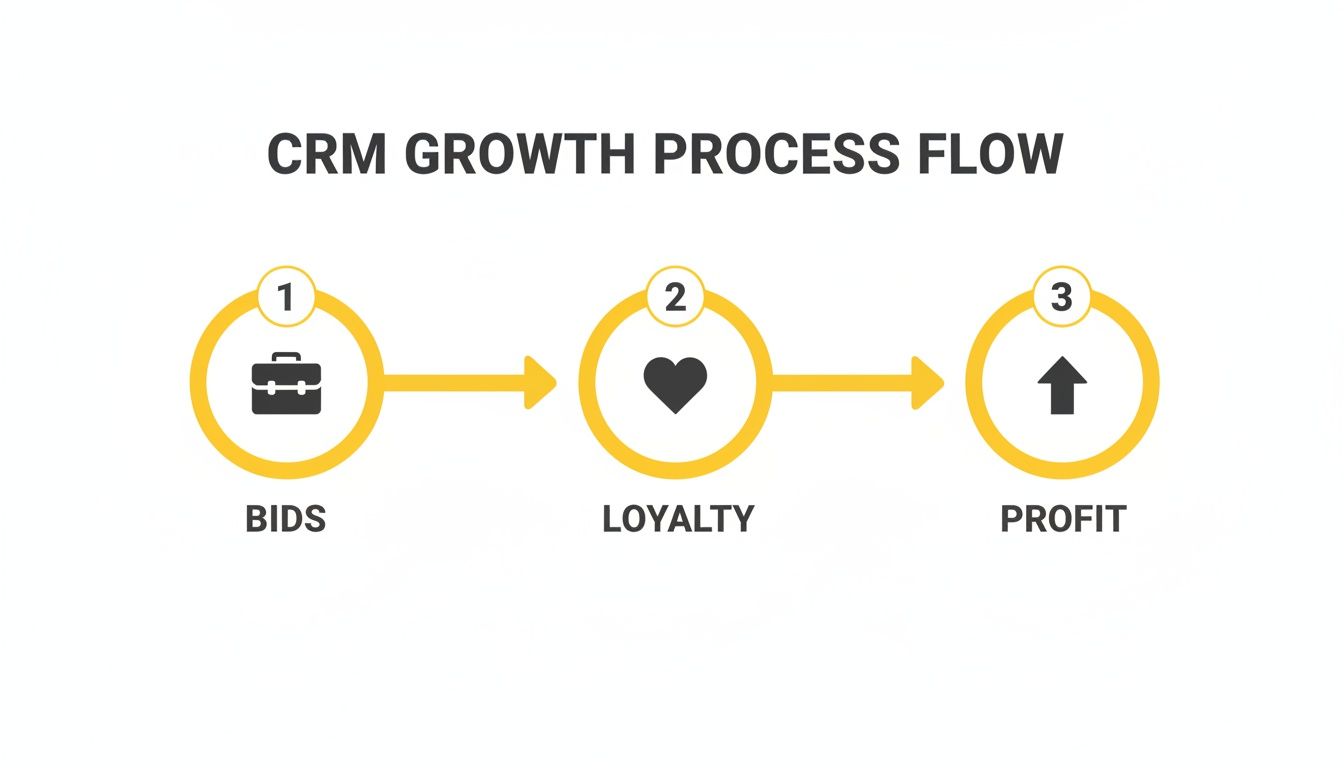
This visual really nails it: effectively managing those initial bids leads directly to stronger client relationships and, ultimately, better profits for your business.
Plan Your Integration and Onboarding Strategy
A CRM is most powerful when it talks to the other tools you already use, like your accounting software (think Xero or MYOB) and project management platforms. Before signing on the dotted line, confirm that the CRM can integrate with your existing tech stack. This "single source of truth" approach gets rid of double data entry and cuts down on frustrating admin errors.
When you're looking at a specific platform, expert guidance can be a massive help for a smooth setup. You might explore specialised Microsoft Dynamics 365 consulting services to ensure a more complex system is configured correctly for your unique workflows.
Finally, think about your team. The best software in the world is completely useless if nobody uses it. A successful implementation lives or dies by a solid onboarding plan.
- Involve Your Team Early: Get input from key team members during the selection process. This builds buy-in right from the start.
- Provide Proper Training: Don't just hand over a login and hope for the best. Schedule dedicated training sessions and provide ongoing support.
- Appoint a Champion: Pick one or two tech-savvy people on your team to be the internal CRM experts who can help their colleagues out.
By planning for the human side of this change, you ensure the software becomes an essential part of your daily operations rather than just another subscription you're paying for.
Integrating Your CRM for a Single Source of Truth
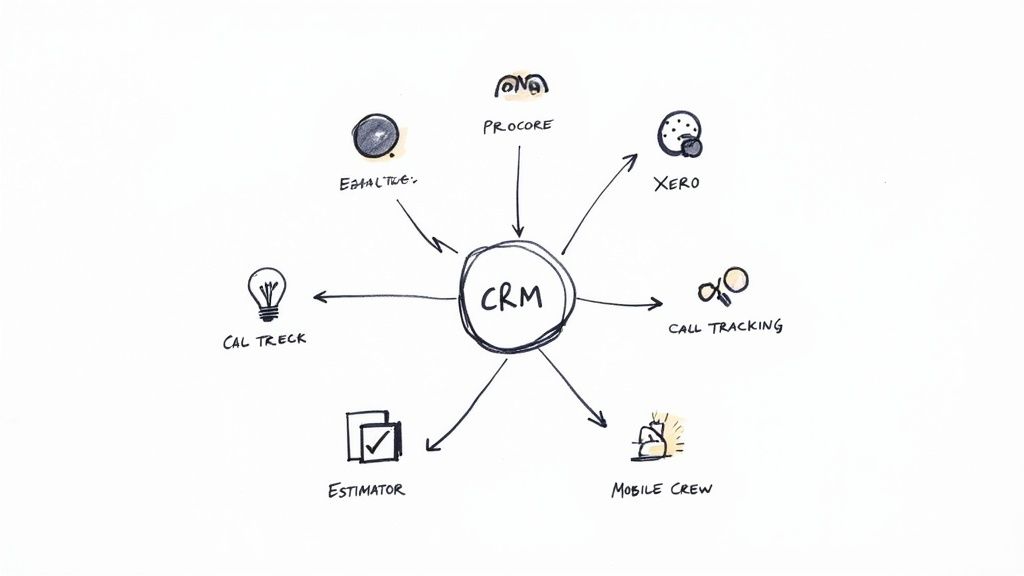
A top-notch CRM for the construction industry is so much more than a digital address book; it’s the central nervous system for your entire operation. It shouldn't be a lonely island of data. The real magic happens when it connects with the other software you rely on every day, creating one single, reliable source of truth for your business.
Think of it like the plans for a build. If the plumber, sparkie, and builder are all working from different, outdated versions of the blueprints, you're guaranteed to have expensive stuff-ups and delays. The same thing happens with your business data. When your systems don't talk to each other, you're stuck doing manual data entry and leaving the door wide open for costly mistakes.
Proper integration turns your CRM into the hub that connects all the spokes of your business, from the books in the office to the boots on the ground.
Connecting Your Essential Business Tools
The goal here is to build an ecosystem where information flows automatically between your most important platforms. When all your software is hooked up, your team gets a complete, 360-degree view of every client and project without having to flick between a dozen different apps.
Here are some of the most powerful connections for a construction business:
- Accounting Software (Xero, MYOB): Hook your CRM directly into your accounting platform to make invoicing a breeze. When you mark a project milestone as complete in the CRM, an invoice can pop up automatically in Xero. No more double entry, and you get paid faster.
- Project Management Tools (Procore, Buildertrend): Link your client info with what's actually happening on-site. This lets your sales and admin team see real-time updates from the field, and your site crew can pull up client comms right where they need it.
- Marketing and Lead Generation Tools: Funnel new leads from your website forms, social media ads, or email campaigns straight into your CRM. This makes sure every single enquiry is captured and assigned for follow-up, so no opportunity ever slips through the cracks.
This level of connectivity is a massive driver of growth in the Aussie construction scene. The market for CRM is tipped to hit USD 5.18 billion by 2035, all thanks to smarter, cloud-based solutions that are helping builders modernise everything from the initial tender to post-project support.
Automating Lead Capture for Zero Missed Opportunities
One of the best quick wins from an integrated system is automating your lead capture, especially from phone calls. For any tradie or builder, a ringing phone means a potential new job, but a missed call often means lost cash.
This is where integration becomes a genuine game-changer. By connecting your CRM with a smart call automation tool, every single phone enquiry—answered or missed—can be instantly logged. A new contact is created, a fresh lead is opened in your pipeline, and all the details are there for your team to act on.
This simple setup completely removes the risk of human error. No more relying on scribbled notes on a bit of scrap timber or trying to remember who called while you were up a ladder. It's a core part of building an integrated communication strategy that gives potential clients a smooth experience and makes your team ultra-efficient.
And it’s not just about customers. A well-connected CRM also helps you manage your relationships with suppliers and subcontractors. Using solid vendor management best practices can seriously streamline how you order materials and work with other trades, pulling everything into one unified system.
Ultimately, a fully integrated CRM breaks down those frustrating data silos, automates the boring manual work, and frees up your team to focus on what they do best: winning jobs and delivering brilliant projects.
Right, getting a new CRM sorted is one thing. Actually turning it into a tool that makes you money is another game entirely. It’s the difference between buying a top-of-the-line ute and just letting it sit in the garage versus using it to haul materials, land more jobs, and properly grow your business.
A CRM built for the construction industry is meant to be the central hub of your whole operation. But like any good tool, it’s only as good as the person using it. Its success hinges on how you and your team use it day in, day out. This means setting up clean workflows and making the data it spits out a core part of how you make decisions.
From Ticking Boxes to Making Smarter Calls
The real magic of a CRM is in the patterns and insights it uncovers. To get to that gold, you need to build solid habits around putting the right info in. Every chat with a client, every update on a tender, and every project note needs to be logged. It might feel like a bit of a drag at first, but this discipline is what turns your CRM from a glorified contacts list into a serious business intelligence machine.
Once the data is flowing, you can set up your dashboards to track the numbers that actually matter to your bottom line.
- Bid-Win Ratio: See at a glance what percentage of your tenders are actually turning into paid work.
- Lead Source Effectiveness: Figure out if your best jobs are coming from word-of-mouth referrals, your website, or those industry contacts you’ve been nurturing.
- Project Profitability: Easily track your actual costs against what you quoted to see which types of projects are consistently your biggest money-makers.
This isn't just about staring at numbers on a screen; it's about asking the right questions. If your bid-win ratio is looking a bit grim, is it because your pricing is off, or are you just chasing the wrong type of jobs? Your CRM has the answers sitting right there.
Turning Data into a Game Plan
Armed with this kind of clear data, you can start making smarter, more strategic moves. Instead of just going with your gut, you’re using cold, hard evidence from your CRM to steer the ship and tighten up your operations.
For instance, your dashboard might show that while you spend a lot of time bidding on big commercial jobs, it’s the small-scale residential renos that are actually twice as profitable. That’s a massive insight. It tells you exactly where to point your marketing and sales efforts to focus on the work that really fuels your growth.
A well-kept CRM becomes your strategic playbook. It tells you where your strengths are, which clients are worth their weight in gold, and where your next big opportunity is hiding. In the tough world of construction, that's the ultimate competitive edge.
At the end of the day, a CRM isn't just a tool for keeping today's mess organised; it's an asset for building your future. By getting your data workflows clean and using its insights to shape your strategy, you turn a software subscription into a powerful engine for real, long-term growth. This is how you stop just managing your business and start actively shaping its success.
Right then, let's tackle those nagging questions that pop up when you're on the home stretch of picking a CRM. Getting these details sorted will help you make the final call with a bit more confidence.
How Much is a Construction CRM Going to Set Me Back?
The price tag on a construction CRM in Australia can jump around a fair bit, but most work on a per-user, per-month subscription. For most small to mid-sized builders and tradies, you’re probably looking at a budget of anywhere from $50 to over $150 per user, per month.
But hold on, the monthly fee isn't the full picture. You've got to think about the one-off costs like getting it set up, moving your old data across, and training up the team. Always ask for a complete quote so you're budgeting for the total cost of ownership, not just the subscription. No one likes a surprise bill.
How Do I Get My Team to Actually Use the New Software?
Getting the crew on board with new tech is less about the software itself and more about the people. You can have the best system in the world, but it's completely useless if no one logs in. The trick is to show them how it makes their life easier, not just adds another task to their plate.
Here are a few things that actually work:
- Get them involved from the start: Ask your site supervisors and project managers for their two cents during the selection process. If they feel like they had a say in choosing it, they’ll be far more invested in making it work.
- Train them properly: Don’t just flick them a login and hope for the best. Run proper training sessions that walk through the real-world stuff they deal with every single day.
- Show them the wins: Point out how the CRM gets rid of painful paperwork or gives them instant access to job details on their phone. When they see it saves them time and headaches, they'll be all over it.
Can This CRM Talk to My Other Software?
It absolutely should, and honestly, this is a non-negotiable. A good, modern CRM for the construction game is meant to be the central hub for your business, not just another island of information.
Think of it this way: the best platforms are built to connect seamlessly with the tools you're already using every day. We’re talking about Aussie accounting software like Xero and MYOB, plus whatever project management tools you rely on. Before you sign on the dotted line, double-check that it integrates directly with your essential software. This is what ensures all your business info flows smoothly from one place to another.
Ready to stop missing calls and start capturing every single lead automatically? OnSilent works with your CRM to make sure no opportunity ever slips through the cracks. Discover how OnSilent can help your business today.